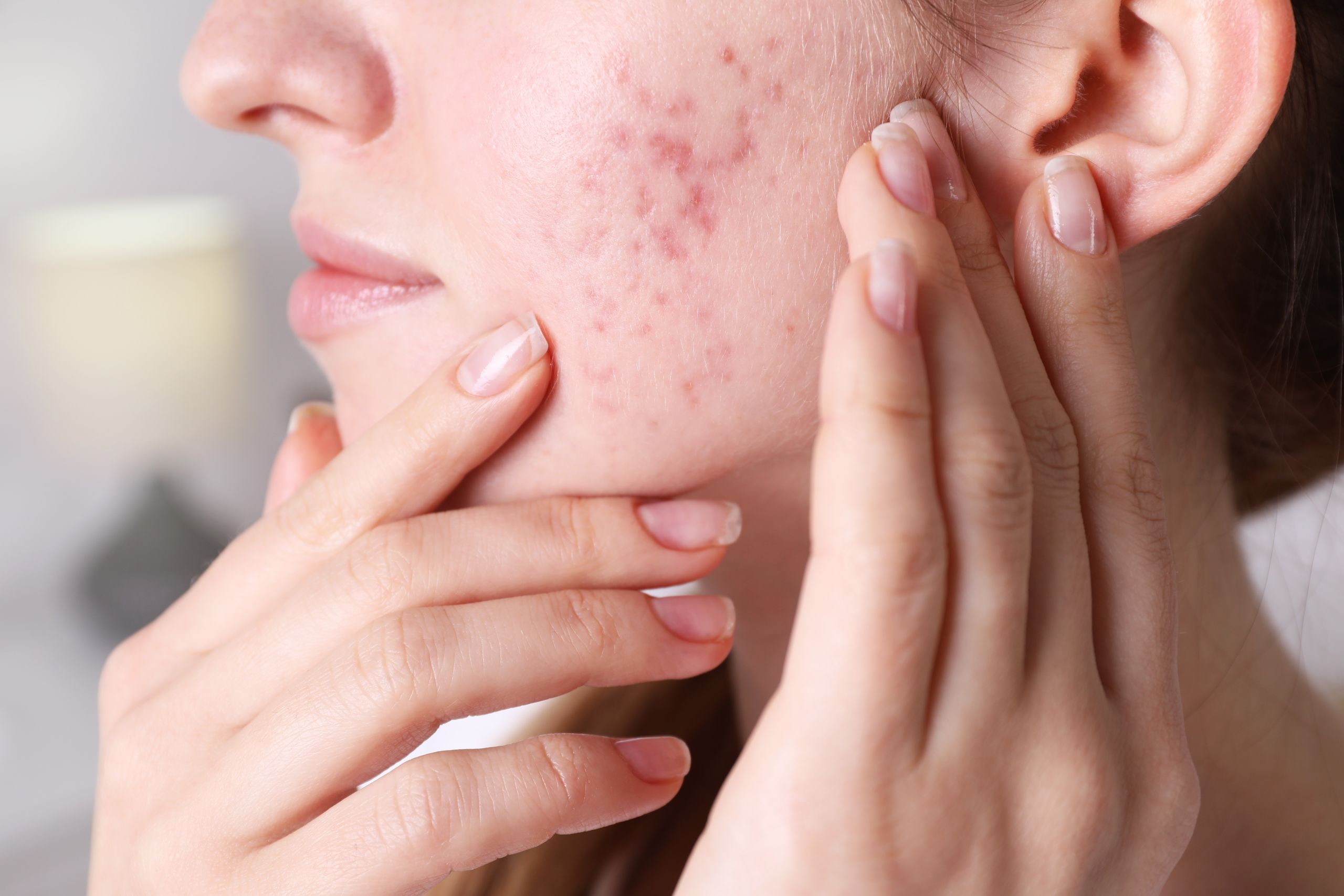
Quick Answer: SkinPen Microneedling for acne scarring can improve indented (atrophic) scars by prompting the skin to build new collagen as it heals. The change is gradual, it builds over a series of treatments, and it is not the right tool for every mark acne leaves behind. At Montrose London in Belgravia, microneedling starts from £395 per session, and a Dermatologist will assess which of your scars it can realistically help before you commit to a course.
If acne has settled but the uneven texture remains, microneedling offers a way to work on the scars themselves. The aim is smoother-looking skin: softer depressions, a more even surface and less obvious textural contrast as light falls across the face. Microneedling for acne scarring works with your skin’s repair response, so the improvement develops gradually rather than arriving as an instant change.
A useful starting point before considering treatment is understanding the type of acne scarring you have. A shallow depression, a narrow deep pit and a flat brown or red mark need different thinking. This guide explains where microneedling fits, what treatment feels like and how to plan a course around your skin, budget and diary.
Which Marks Respond to Microneedling for Acne Scarring?
Acne leaves different kinds of mark behind, and they do not all respond to the same treatment. Montrose’s guidance groups them into three:
- Indentations – depressed or atrophic scars that sit below the surrounding skin, caused by a loss of tissue. This is where microneedling is strongest, because stimulating collagen helps to fill and smooth the skin gradually
- Raised scars – firm scars that sit above the skin’s surface, formed when the skin produces too much collagen while healing. A treatment built to stimulate collagen is not the obvious first choice here
- Discolouration – dark spots or red marks left once a spot has healed. Strictly speaking these are not scars, and bringing back an even tone is a different task from rebuilding lost tissue. Sciton BBL, a light-based treatment, is the option Montrose suggests for pigmentation
Most people have a mixture. Working out which pattern dominates is the first job of an assessment, and it decides whether microneedling is the right place to start.
Rolling, Boxcar And Ice-pick acne Scarring: What Is The Difference?
Rolling scars create broad, shallow dips with sloping edges. Boxcar scars have more defined edges and can be shallow or deep. Ice-pick scars are narrow pits that extend deeper into the skin. These are all forms of indented acne scarring, but their shape influences how much microneedling alone can change.
Microneedling is often considered for shallow depressed scars and general uneven texture. Deep, narrow scars or depressions held down by fibrous bands may benefit from a targeted treatment as part of the plan. Matching microneedling to the scar pattern gives you a more useful goal than treating every mark as if it were the same.
Why Can Acne Scarring Look Different In Different Light?
Indented scars cast shadows. Side lighting, a bathroom mirror or a close-up photograph may make those dips look much more obvious than soft light from the front. The improvement you want may therefore be less shadowing and a smoother transition between scarred and surrounding skin. Photographs taken consistently are more helpful for judging microneedling progress than comparing two pictures with different lighting.
Acne scarring can include several patterns on the same cheek. Microneedling may address the wider texture while a separate, focused treatment tackles a few deeper scars. That combination is about giving each part of the concern the right tool, rather than adding treatments without a clear purpose.
Treat Active Acne Before Microneedling for Acne Scarring
Scarring is the aftermath, so the order matters. The British Association of Dermatologists advises controlling acne as soon as it appears, because that helps to avoid permanent scarring. Microneedling treats the scars, not the breakouts.
For the same reason, Montrose’s guidance is that it is not suitable if you have an active skin infection, an inflammatory skin condition, or open wounds in the treatment area. If you have severe active acne, or are on certain acne treatments, speak to a Dermatologist first. Tell your practitioner about current or recent acne medication, including isotretinoin, so the timing and choice of scar treatment can be planned for your skin. Microneedling is also not recommended during pregnancy, or if you have a history of skin cancer or a photosensitivity disorder.
If acne is still active, begin there. Our article on the most effective treatment for acne sets out the options, and scar treatment can follow once your skin has settled.
Treating / managing active acne protects the progress you are trying to make with scar treatment. Microneedling is aimed at established texture changes; ongoing inflamed spots can continue to leave new marks. A plan for acne scarring therefore works best when breakouts and the scars they have left are considered together, with the treatment sequence made clear.
Before microneedling, tell your practitioner about prescription skincare, recent isotretinoin use, cold sores, unusual healing or a tendency to raised scars. These details help shape timing and aftercare. Your skin history should guide the plan, including any preparation needed for microneedling, rather than a standard routine copied from someone else’s treatment.
What the Evidence Says
Microneedling for acne scarring is one of the techniques the British Association of Dermatologists lists for improving the appearance of acne scars, alongside steroid injections, chemical peels, subcision and laser. It also notes that these are not routinely available on the NHS.
The research is encouraging rather than definitive. A systematic review and meta-analysis of 12 randomised controlled trials, covering 414 participants, concluded that microneedling is a favourable choice for acne scarring, with less post-inflammatory hyperpigmentation than the treatments it was compared against. A literature review of studies from 2020 to 2024 reached a similar view: microneedling was well tolerated and particularly noted for its safety in darker skin types, and combining techniques tended to beat any single treatment.
For you, the practical message is that microneedling has a useful place in treating atrophic acne scarring, with treatment chosen for the scar pattern. The research does not identify one course that suits everyone. Improvements in texture are assessed over time, and the plan can be refined if some deeper scars need a different approach.
How Does Microneedling Encourage Smoother Skin?
Fine needles create controlled channels in the skin, triggering a healing response and collagen remodelling. Collagen is part of the support structure beneath the surface. As that tissue remodels, suitable depressions can become less noticeable and the surrounding texture can look more even.
This also explains why microneedling is a course-based treatment for acne scarring. The procedure starts the repair process, but the visible change takes longer as it relies on your body producing new collagen, which can take weeks-to-months. Spacing the sessions gives the skin time to recover and respond before the next treatment, with progress assessed across the course.
What a Course of Microneedling for Acne Scarring Looks Like
SkinPen is a medical-grade microneedling device. Its needle depth can be adjusted, so treatment is tailored to the scar and the area being treated. We explain the mechanism in more detail in our article to what microneedling is and how it works; here is what it means for scarring.
Most people begin with three initial sessions, spaced several weeks apart, followed by annual maintenance. Each appointment takes up to 90 minutes in total, including around 30 minutes for the numbing cream to take effect, with one to three days of recovery. At your first appointment your practitioner photographs the treatment area, which gives you a baseline to compare against as results develop over the following weeks and months.
Because SkinPen relies on mechanical micro-injury rather than heat or light, it carries a lower risk of post-inflammatory hyperpigmentation than some laser-based treatments. That makes it a suitable consideration for a wide range of skin tones, with suitability always confirmed individually. Preparation and aftercare, including sun protection, are detailed on the SkinPen Microneedling treatment page.
What Happens During a SkinPen Microneedling Appointment?
First, the treatment area is checked, cleansed and photographed. Numbing cream helps make microneedling more comfortable before the pen is moved across the skin in controlled passes. The needle depth is adjusted to the area and treatment objective. Different parts of the face can need different settings, rather than the same depth everywhere.
You may feel a prickling or vibrating sensation during microneedling, and some areas can feel more sensitive than others. The skin can look pink or red afterwards and feel warm, tight or tender. Your practitioner will explain what to expect for the depth used and how to look after the treated area when you leave.
Does Deeper Microneedling Always Give a Better Result?
No. The right depth is the one appropriate for your skin and the scar being treated. More aggressive microneedling is not a shortcut to smoother skin and can increase injury. Personalisation means adjusting the treatment to the area, skin response and pattern of acne scarring, while allowing adequate healing between appointments.
How Many Microneedling Sessions Should You Plan For?
Montrose generally starts with three microneedling sessions spaced several weeks apart. That is an initial plan rather than a universal finishing point. Some acne scarring needs a longer course or a combination of treatments. Reviewing photographs and the change in texture helps you and your practitioner decide what further treatment would be useful.
The spacing matters as much as the number. Booking microneedling more frequently does not give collagen time to develop faster. A course should fit around recovery, sun exposure and any other skin treatments, with room to judge the response before committing to further sessions.
When Will Acne Scarring Start To Look Smoother?
Microneedling results develop over weeks and months as the skin remodels. Early smoothness or fullness immediately after treatment can be the result of swelling, so it is not the best point to judge scar improvement. Look instead for a gradual change in the depth and visibility of the scars after the skin has healed.
Microneedling Recovery: The First Few Days
Montrose advises allowing one to three days of recovery after SkinPen microneedling. Redness, mild swelling, dryness or flaking can affect how your skin looks during that period. If you have an important event, allow a comfortable buffer and discuss your diary before treatment, particularly for your first session.
For the first 24-48 hours, Montrose’s published microneedling aftercare advises keeping the area clean and avoiding makeup. It also advises avoiding heat and strenuous exercise for 48 hours and pausing retinoids and vitamin C for 14 days. Follow the instructions supplied for your own treatment, including when to restart skincare and sun protection.
Good aftercare gives the healing skin a calmer environment. Avoid picking at flakes or adding strong exfoliants to speed things up. If pain, swelling or redness is worsening rather than settling, contact the clinic. Microneedling can cause infection, pigment changes or scarring, although these complications are much less common than the temporary redness and sensitivity, which is to be expected.
Microneedling For Acne Scarring In Darker Skin Tones
Microneedling does not rely on targeting pigment with light, which makes it an important option to consider across skin tones. A history of dark marks after spots or skin irritation still matters. Your practitioner can take that history into account when planning microneedling depth, treatment spacing and aftercare.
The aim is to improve acne scarring while looking after the surrounding skin tone. Brown marks and indented scars can coexist, so a plan may address them separately. Microneedling is used mainly for texture, but it may well help with dark marks to some extent too. Where pigmentation is a significant concern, it may need to be combined with other treatment, and your Dermatologist can explain how the two fit together.
When Microneedling for Acne Scarring Is Not Enough
Deeper scarring often needs more than one approach. Some deeper scars benefit from targeted laser resurfacing or other techniques, while SkinPen offers a course-based approach with a short recovery period. Montrose’s acne scarring guidance lists the options a Dermatologist or Plastic Surgeon may combine or choose between:
- Morpheus8 (from £495) – combines microneedling with radiofrequency to stimulate collagen and improve skin texture
- Sciton ProFractional (from £495) – a fractional laser that treats deep into the skin, encouraging new collagen growth, with 4 to 7 days of recovery
- Sciton HALO (from £1,500) – a hybrid fractional laser that resurfaces the skin, reducing scars and improving texture. It helps with some types of acne scar but not all, and is sometimes combined with ProFractional for more severe scarring
- Contour TRL (deep resurfacing from £710) – a resurfacing laser that removes the top layer of skin so that new, healthier skin can form
- Subcision – a minor surgical procedure for depressed scars, which breaks up scar tissue
- Profhilo (from £600) – an injectable that hydrates and remodels the skin, improving its overall appearance
- Surgical excision – the removal of deep “ice pick” scars
The choice depends on the type and number of scars, your skin tone and how much downtime you can accept.
SkinPen Microneedling Or Morpheus8?
SkinPen uses mechanical microneedling, while Morpheus8 combines needles with radiofrequency energy. Both are used in treatment plans for acne scarring, but adding heat changes the treatment experience and risk profile. The choice should follow the skin concern and the result being sought, rather than an assumption that the more intensive device is automatically better.
For some people, microneedling is an appealing starting point because they want gradual texture improvement with a short recovery period. For others, a different technique or a staged combination better matches the scars.
Microneedling Or Laser For Acne Scarring?
Microneedling stimulates repair through controlled needle channels. Fractional lasers use light energy to create treatment zones in the skin, with the effect and recovery varying by laser type and settings. Some deeper or sharply edged scars may need targeted resurfacing or another procedure. Skin tone, scar shape and the downtime you can manage all help determine the better fit.
These options can complement each other when different scars need different treatment. For mixed acne scarring, microneedling may improve the wider texture while a targeted approach deals with individual depressions. The benefit of a personalised plan is knowing why each treatment is included and what change you are looking for.
When Does Subcision Enter The Conversation?
Some depressed scars are tethered by fibrous tissue beneath the surface. Subcision releases those attachments, whereas microneedling focuses on controlled skin injury and remodelling. If tethering is an important part of your acne scarring, treating that feature can be more relevant than simply repeating the same surface treatment.
Can Creams Or A Home Roller Replace Professional Microneedling?
Skincare can support acne control, hydration and skin tone, but it does not work in the same way as professional microneedling for established depressions. Home rollers also differ from a clinical treatment with controlled depth and sterile equipment. Trying to reproduce deeper microneedling at home can cause damage, infection or additional scarring.
What to Expect at Your Consultation
- A 30-minute consultation with a Dermatologist or Plastic Surgeon, to assess your scars and any active acne.
- Triage through Montrose’s proprietary system, which refers you to the most suitable practitioner.
- A tailored plan – microneedling, an alternative, or a combination – with the reasoning explained.
- Aftercare from Montrose’s doctors and aestheticians, with a dedicated Patient Co-ordinator as your point of contact throughout.
The best results come from matching the treatment to the type of scar, and from being honest about what each option can and cannot change. Book a consultation at Montrose London and we will work out where microneedling for acne scarring fits for you.
If acne scarring is affecting how you feel about your skin, you do not need to choose a device before asking for help. At Montrose London, a Dermatologist or Plastic Surgeon can explain the scars you have, where microneedling could make a useful difference and how other options compare. The aim is a plan that fits your skin and the improvement you want, with clear costs and a manageable treatment journey.
Montrose London is a CQC-registered, Consultant-led clinic at 19 West Eaton Place, Belgravia, London SW1X 8LT, offering SkinPen microneedling for acne scarring from £395 per session, alongside laser and radiofrequency options for deeper scars, each assessed by an experienced Dermatologist or Plastic Surgeon. No GP referral required. Rated 4.93/5 on Doctify. Book at montroselondon.com, call 020 7112 8298 or WhatsApp 07354 848584.
FAQs
Does microneedling for acne scarring work?
It can. Acne scarring is one of microneedling’s strongest indications, particularly for indented scars, where stimulating collagen helps to fill and smooth the skin gradually. Results depend on the type of scar and build over a course of treatments.
How many sessions of microneedling for acne scarring do I need?
Most people begin with three initial sessions, spaced several weeks apart, followed by annual maintenance. Deeper or mixed scars may need further sessions or a combination of treatments, with progress reviewed across the course.
Can microneedling remove acne scars completely?
The aim is smoother-looking skin and less noticeable scars, rather than complete removal. Microneedling aims to improve the appearance and texture of scars, and deeper scarring may need to be combined with other treatments for the best result.
Is microneedling safe for darker skin tones?
Because it relies on controlled micro-injury rather than heat or light, microneedling carries a lower risk of post-inflammatory hyperpigmentation than some laser-based treatments. Depth, spacing and aftercare are planned around your skin and any history of pigment changes.
Can I have microneedling if I still get breakouts?
It is not suitable if you have an active skin infection or an inflammatory skin condition. If you have severe active acne, or are on certain acne treatments, speak to a dermatologist first, because bringing acne under control comes before treating scars.
Is microneedling or laser better for acne scars?
Both can improve acne scarring The most useful choice depends on the particular laser, scar shape, skin tone and recovery involved. SkinPen microneedling has a short recovery period, while some deeper scars need targeted resurfacing or another technique. The better choice depends on your skin and scar type.
Does microneedling help the red or dark marks acne leaves behind?
Those marks are not true scars, and microneedling is mainly used for texture. A more even skin tone is a possible secondary benefit, and Montrose suggests Sciton BBL, a light-based treatment, for pigmentation. If you have both marks and depressions, the plan can address skin tone and texture separately.
Is microneedling for acne scarring available on the NHS?
The British Association of Dermatologists notes that techniques such as microneedling are not routinely available on the NHS. At Montrose you can book directly, with no GP referral required.
How much does microneedling cost at Montrose?
SkinPen microneedling starts from £395 per session, with each appointment lasting up to 90 minutes including numbing time. Because it works best as a course, your practitioner will discuss the plan at your consultation.
Can microneedling help old acne scarring?
Yes. Established indented scars may improve with microneedling even when the acne healed years ago. What matters is the type and depth of the scar, not how long it has been there.
Is SkinPen microneedling the same as radiofrequency microneedling?
No. SkinPen microneedling creates controlled needle channels without adding radiofrequency heat. RF microneedling, such as Morpheus8, delivers energy through needles as well. Both can be considered for acne scarring, with the method chosen for your skin and treatment goal.
Will microneedling make acne scars disappear?
Microneedling aims to make scars less noticeable, not to erase them. It works best on shallow to moderate indented scars, where it can soften the surface and reduce the contrast with the surrounding skin. Deeper or tethered scars may need another technique alongside it.
How do I know whether microneedling is working?
Compare your skin after it has recovered, using photographs taken in similar lighting and from the same angle. Look for a change in texture and the visibility of the depressions rather than redness or swelling immediately after microneedling. A review can help decide whether further microneedling or a different approach would be most useful.
Can I wear makeup after microneedling?
Montrose advises avoiding makeup for 24-48 hours after microneedling. This gives the freshly treated skin time to settle. Plan around that short break, and use the aftercare instructions supplied at your appointment for the products and timing appropriate to your skin.
Is microneedling painful?
Numbing cream helps make microneedling more comfortable. You may still feel prickling or vibration, and some facial areas can be more sensitive. Tell your practitioner how it feels during treatment so comfort can be addressed as the session progresses.
Can microneedling be combined with other scar treatments?
Yes. Microneedling can form part of a staged plan when acne scarring includes several types of depression or uneven texture. Subcision, laser treatment or targeted surgical techniques may address features that microneedling alone does not change sufficiently. The sequence and recovery between treatments are planned for your skin.
Do I need annual microneedling forever?
Montrose describes annual maintenance as part of its general microneedling guidance, but follow-on treatment should reflect your skin and the reason for treating. Scar improvement and ongoing skin-quality goals are different considerations. After the initial course, a review can help you decide whether more microneedling would be useful.