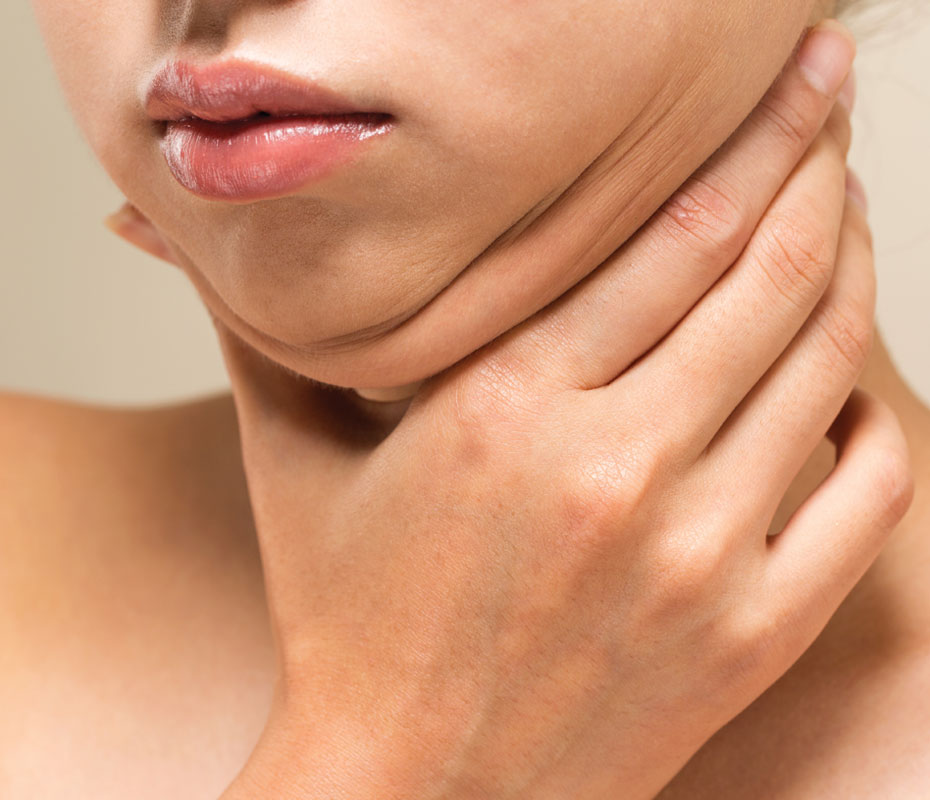
Quick Answer: Non-surgical treatments suit a mild double chin or early neck laxity, where the aim is firmer skin or a more balanced profile. Surgery – liposuction, a neck lift or both – can address under-chin fat, muscle laxity and separation or marked loose skin. At Montrose London in Belgravia, a Plastic Surgeon assesses whether fat, muscle separation or skin laxity is driving your double chin before recommending anything, so you are not paying for a treatment built for a different problem.
If your jawline has softened or your neck looks looser in photographs, the most useful question is what needs to change: fullness, skin firmness or both. Treatments for sagging necks and double chins work in different ways. A smoother neck may come from improving the skin, while a more defined chin-to-neck angle may need fat reduction or surgery. Understanding that distinction makes the options much easier to compare.
Why a Double Chin and a Sagging Neck Often Come Together
The two concerns sit side by side, so it’s easy to treat them as one. They are not always the same thing. A double chin is usually about what lies beneath the jaw – a layer of fat, loose skin, or both. A sagging neck is more often about skin and the tissue supporting it losing tone. Plenty of people have one without the other, and plenty have both.
Montrose’s own guidance identifies a handful of causes:
- Genetics – a family history of double chins or less elastic skin
- Weight gain – excess weight can lead to fat accumulating under the chin
- Ageing – loss of skin elasticity, separation of the platysma muscle and fat deposition over time
- Posture and screen time – Posture changes how the chin and neck appear, but it is not a reliable guide to whether fat reduction or skin tightening will help
What you see in the mirror falls into three broad patterns: a visible layer of fat, sagging skin, or a loss of definition along the jawline and neck. Most people recognise at least two. Working out which is dominant is what decides whether a non-surgical or surgical route will actually deliver.
Are you seeing loose skin, under-chin fat or neck bands?
Under-chin fat creates volume: a rounded pocket beneath the jaw. Loose skin creates draping or crepiness, sometimes with little extra fullness. Vertical bands are a different feature again, involving separation of platysma muscle beneath the skin. Sagging necks can combine these changes, which is why tightening the surface alone may leave part of the original concern unchanged.
Double chins can also look more prominent when the chin has less projection. In that situation, improving facial balance may make the profile look better without reducing fat. The aim is to identify the change that will make a useful difference to your appearance, rather than choose a treatment simply because it is advertised for the chin.
Why do double chins appear even at a healthy weight?
A healthy weight does not rule out localised fat beneath the chin. Genetics and the way your face and neck are shaped can leave fullness in this area even when your weight is stable. Equally, sagging necks can become more noticeable after weight loss because the skin no longer sits over the same volume. Losing more weight is not always the answer to either concern.
What Non-Surgical Treatments Can Do and What They Can’t
Non-surgical options are best understood as refining tools. They improve skin quality, tighten mild laxity or rebalance the profile. They are not a substitute for removing fat or loose skin, and the honest ones will say so.
Sofwave
Sofwave uses ultrasound energy delivered to the mid-dermis to stimulate collagen and tighten skin, with Montrose offering it as a non-surgical lift for the neck and under-chin area. It is a subtle option, suited to mild to moderate laxity rather than a heavy fold. Sessions take 45 to 75 minutes with no downtime, and one treatment is typical, with optional maintenance after 12 to 18 months. Improvement builds gradually, with results usually visible from 6 to 12 weeks. Prices start from £2,600 for one area, indicative and confirmed after consultation.
For early sagging necks, the appeal of Sofwave is gradual firming without incisions. The handpiece delivers ultrasound energy through the skin, with cooling to protect the surface. You may feel warmth or mild discomfort during treatment; your appointment includes a discussion about comfort measures. The change develops as collagen remodels, so it is a choice for a subtle improvement in skin support rather than an immediate surgical contour.
Where double chins are mainly made more noticeable by loose skin, that improvement in support can refine the outline beneath the jaw. Sofwave does not suction out a fat pocket, so its role is different from liposuction.
Thermage
Thermage uses radiofrequency to heat the deeper layers of the skin, stimulating collagen and tightening skin that has loosened under the chin and along the jawline. Montrose is clear that it does not remove fat. A session takes up to 90 minutes including preparation, with 1-3 days of recovery, and prices start from £1,800 for a single session with annual maintenance.
Thermage may appeal when you want to improve firmness across a broader area of the neck and jawline. Radiofrequency energy heats tissue to encourage collagen remodelling, with results developing over time. When comparing Thermage with ultrasound treatment for sagging necks, the useful differences are the area being treated, the degree of laxity and the treatment experience. Both are skin-focused approaches.
Morpheus8
Morpheus8 combines microneedling with radiofrequency energy, working on skin laxity, texture and tone across the neck and jawline. As with Thermage, it tightens skin rather than removing fat. Sessions take up to 90 minutes including numbing, with 1-3 days of recovery, and prices start from £495, typically over three initial sessions with annual maintenance.
Morpheus8 adds fine needles to radiofrequency treatment. This allows energy to be delivered within the skin and can make it a useful discussion when sagging necks are accompanied by uneven or crepey texture. Numbing is used, and the skin commonly needs a few days to settle. It is a more involved skin treatment than a needle-free appointment, with depth and energy selected for the area.
For double chins, the important distinction is the treatment objective. A plan aimed at improving skin quality and modest laxity should not be confused with an operation designed to remove an under-chin fat deposit.
Chin and Jawline Filler
Filler doesn’t reduce a double chin. It changes the proportions around it. Chin filler improves chin contour and projection, while jawline filler sharpens definition along the jaw. Both can shift how the profile reads, which is useful when a modest amount of fullness is made more noticeable by a less defined chin or jaw. Each starts from £395, takes 30 to 45 minutes, and typically lasts 6-12 months or longer.
Profhilo for Neck Skin
If crepey, lax skin is the main concern rather than fullness, Profhilo is worth discussing. It treats the face, neck and hands, improving hydration, texture and firmness by stimulating collagen and elastin. Montrose is candid that it will not address significant sagging as well as other treatments. It’s a skin-quality option, from £600, with an initial course of two sessions four to six weeks apart.
Think of Profhilo as a skin-quality option: the appeal is a better-hydrated, smoother-looking neck. It does not reproduce the repositioning of a neck lift. This distinction is especially helpful if you have both fine crepiness and a heavier fold, because the treatment that improves the surface may differ from the one that changes the overall contour.
For how these same tightening options apply along the jawline specifically, our article on the best treatments for sagging jowls goes into the detail.
When Surgery Is the Better Answer
Some changes need tissue removed or repositioned. Where a double chin has a real fat layer, or the skin and underlying structures have loosened beyond what energy-based treatment can tighten, surgery is the more effective route. Montrose’s guidance points to liposuction and a neck lift as the options that deliver more dramatic and lasting change, by reducing fat deposits and recontouring the neck.
Both are performed by Montrose’s Plastic Surgeons. One of our Co-Founders & Consultant Plastic, Reconstructive & Aesthetic Surgeon, Dr Georgina Williams, sets out her own approach to the surgical detail – how each operation works, who it suits, and what the recovery involves, in her article on how to remove a double chin surgically.
Surgery isn’t a decision to rush, and Montrose’s pathway reflects that. After your first consultation there is a two-week cooling-off period, giving you time to reflect before deciding whether to proceed. You can see how each step works in our Patient Journey.
One point worth knowing: non-surgical treatment and surgery aren’t strictly either-or. Sofwave, for example, can be used before a facelift or neck lift to improve skin quality, with timing coordinated with your surgeon.
Liposuction for double chins: what changes?
Liposuction removes localised fat through a small tube called a cannula. For double chins caused mainly by fat, reducing that volume can reveal a clearer outline beneath the jaw. Skin elasticity matters: the skin needs to settle over the new contour, and fat removal alone does not remove a loose fold. This is why the same amount of fullness can lead to different treatment plans in two people.
A neck lift for sagging necks: what changes?
A neck lift addresses loose tissue by removing excess skin and most importantly addressing the deep tissues, typically with a deep neck lift. The platysma muscle is repaired to recreate a sling and reform the neck contour. Deep components such as fat and submandibular glands may also be reduced. The benefit is a more direct change to a hanging fold or a poorly defined neck contour. For sagging necks with both excess skin and fat, a surgeon may combine lifting with fat reduction. The precise operation follows the anatomy rather than a standard package.
Recovery: a skin appointment or an operation?
Non-surgical treatment usually fits around normal life more easily, although redness, swelling, tenderness or bruising may still affect your plans. Surgery needs more recovery time, with swelling, bruising and temporary changes in sensation or movement as the area heals. Incisions leave scars hidden in natural creases, and the final contour takes time to settle. Your surgeon will explain the expected time away from work, any compression support and when exercise can resume for your particular operation.
The trade-off is the scale of change. Skin treatments can suit early sagging necks when you want gradual refinement; surgery can make a more substantial change when tissue needs to be removed or repositioned. Neither route stops future ageing, so the best comparison is the improvement each can reasonably make to your own neck.
Non-Surgical or Surgical: Which Fits What You See?
- A small amount of fullness, skin that still springs back – non-surgical options such as skin tightening, or filler to rebalance the profile, may be enough
- Skin that has loosened but little extra fat – energy-based tightening such as Sofwave, Thermage or Morpheus8 is the natural starting point
- A noticeable fat layer that doesn’t respond to weight loss – this points towards surgical fat reduction
- A pronounced fold of loose skin, or a neck that has lost its contour – a neck lift is more likely to give the change you’re hoping for
- A mix of all three – a staged plan, often combining approaches, assessed individually
Weight loss is commonly recommended for a double chin, and if you’re above a comfortable weight it’s worth discussing first, since it can change what you need. It’s a guide, not a diagnosis: the only reliable way to know which category applies is to be examined.
Can creams or exercises improve sagging necks and double chins?
Moisturiser can make dry, crepey skin look and feel smoother, and sun protection helps limit further UV damage. These are useful ways to look after the neck, but skincare does not remove a fat deposit or excess skin. Neck exercises are not an established substitute for treating double chins, and changing posture does not recreate the tissue changes of a neck lift.
What if you want to avoid surgery?
You can still make a useful improvement when your main concern is mild laxity, texture or facial balance. The key is to choose an achievable goal: firmer-looking skin, a smoother surface or better chin projection. For more pronounced sagging necks, the decision is whether that smaller change would satisfy you, or whether the contour change you want calls for a surgical approach.
Side effects and suitability in perspective
Temporary redness, swelling and tenderness can follow skin-tightening treatment; needle-based and injectable procedures can also cause bruising. Less common complications depend on the technique and can include burns, pigment changes or scarring. RF microneedling can also cause unwanted fat loss or nerve injury. Filler has a rare risk of blood-vessel blockage. Surgery adds risks such as bleeding, infection, contour irregularity and changes in sensation or movement. Your practitioner will explain the risks relevant to your treatment, alongside your health and skin history.
What to Expect at Your Consultation
- A 30-minute consultation with a Plastic Surgeon to discuss your concerns and assess what is driving your double chin or neck laxity.
- Triage through Montrose’s proprietary system, which refers you to the most suitable practitioner.
- A clear plan – non-surgical, surgical, or a staged combination – with the reasoning explained.
- Aftercare from Montrose’s doctors and aestheticians, with a dedicated Patient Co-ordinator as your point of contact throughout.
A double chin rarely has a single cause, which is why the best choice is the one matched to what is actually happening beneath your jaw, not the most heavily marketed option. Montrose’s team will assess it properly and recommend the route that makes sense for you, whether that’s skin tightening, filler, or a conversation about surgery. Book a consultation at Montrose London to find out where you stand.
Whether sagging necks, double chins or a combination are bothering you, a personalised plan should connect the concern you see with the improvement you want. At Montrose London, you can explore skin treatments and surgical options within the same Consultant-led clinic. Bring your questions, and we will help you compare the routes clearly.
Montrose London is a CQC-registered, Consultant-led clinic at 19 West Eaton Place, Belgravia, London SW1X 8LT, offering non-surgical and surgical treatments for a double chin and sagging neck – including chin filler (from £395), Thermage (from £1,800) and Morpheus8 (from £495) – each assessed by an experienced Plastic Surgeon. No GP referral required. Rated 4.93/5 on Doctify. Book at montroselondon.com, call 020 7112 8298 or WhatsApp 07354 848584.
FAQs
What’s the difference between a double chin and a sagging neck?
A double chin is central fullness beneath the jaw, usually from a fat layer, loose skin or both. A sagging neck is mainly about skin and supporting tissue losing tone. They often appear together, but treating one doesn’t automatically fix the other.
Can Sofwave get rid of a double chin?
Sofwave tightens and lifts skin in the neck and under-chin area, so it can help where loose skin contributes to a double chin. It is a subtle, non-surgical option rather than a way to remove a significant fat layer.
Does Thermage remove fat under the chin?
No. Thermage tightens the skin by stimulating collagen, but it does not remove fat. It suits patients whose main concern is loose skin rather than a fat deposit.
Is Morpheus8 or Thermage better for a double chin?
They work differently. Thermage uses radiofrequency to tighten skin, while Morpheus8 combines microneedling with radiofrequency. Neither is a surgical fat-removal treatment, so the better choice depends on your skin and goals, which your practitioner can advise on.
Can chin filler help a double chin?
Chin filler improves chin contour and projection, which can change how the profile looks. It doesn’t reduce fat or tighten loose skin, so it works best for balance rather than as a double chin treatment in its own right.
Will losing weight get rid of my double chin?
Weight loss is commonly recommended and can reduce a double chin, particularly where excess weight is a factor. Genetics and ageing also play a part, so it won’t resolve every case.
Can I have non-surgical treatment before a neck lift?
Sometimes. Treatments such as Sofwave can be used before surgery to improve skin quality, but timing should always be coordinated with your surgeon.
Can liposuction make a loose neck look looser?
It can leave looseness more apparent if the skin does not contract well after fat removal. Liposuction reduces volume; a lift deals more directly with excess skin. That is why double chins with good skin elasticity are assessed differently from fullness accompanied by a hanging fold.
How long do results for sagging necks take to appear?
Collagen-focused treatments build gradually over weeks and months. Montrose describes Sofwave improvements from around 6 to 12 weeks. Surgical swelling also needs time to settle before you can judge the contour. The treatment timeline should therefore match both your diary and the type of improvement you are seeking.
Do I need a GP referral for a consultation?
No GP referral is required at Montrose. You can book directly with the clinic.