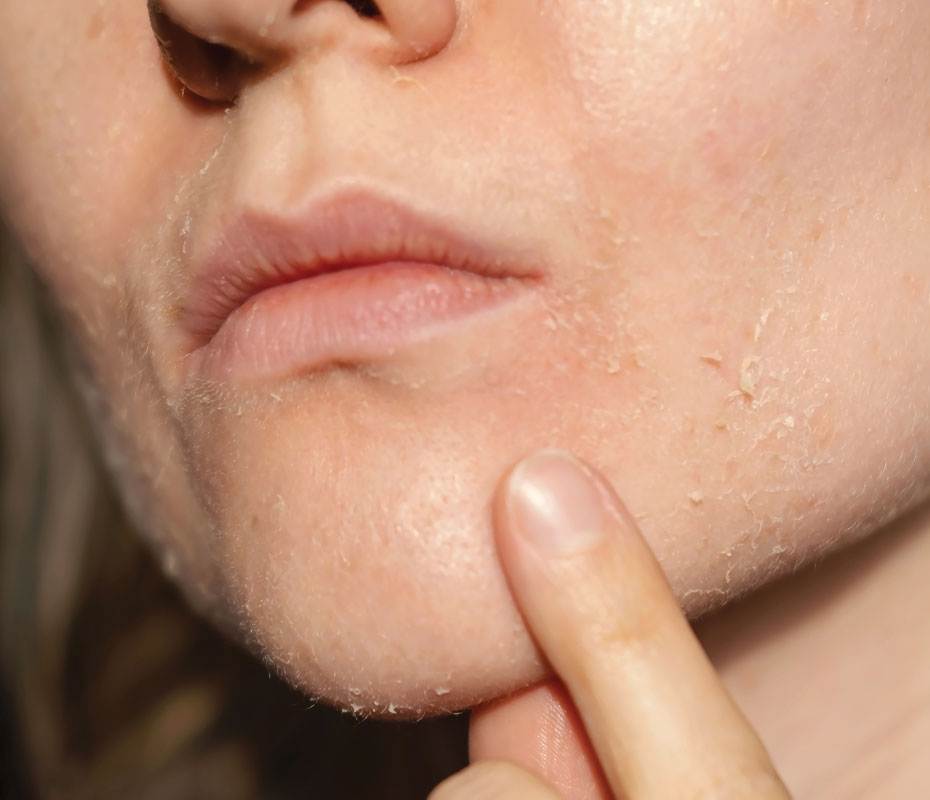
Quick Answer: To fix dry skin, start with gentle cleansing and a regular emollient, then check whether persistent redness, itching or cracking points to something more than everyday dryness. Once your routine and the underlying cause have been properly assessed, cosmetic hydration treatments such as a HydraFacial, Montrose Facial, Oxygen Facial, Profhilo or polynucleotides can be considered if that’s your goal. If dryness comes with redness, itching or flaking that won’t settle, that suggests dermatitis, which needs a proper diagnosis rather than a stronger moisturiser. At Montrose London in Belgravia, a consultation with an experienced aesthetician or dermatologist establishes which category applies before any treatment is recommended.
If you’ve been asking, “how do I fix dry skin?”, start with the everyday steps that make the biggest difference: gentler washing, a fragrance-free cream or ointment applied while skin is still slightly damp, and reapplying whenever tightness comes back. Dry skin might just be your skin type, a temporary reaction to cold air or frequent handwashing, or part of a condition that needs its own plan – and working out which one you’re dealing with is worth doing before you spend time or money on a treatment.
The same logic applies to facial dryness: start with that same simple foundation. A treatment aimed at glow or skin quality is worth considering once that’s genuinely your goal, but regular moisturising and an honest look at any persistent symptoms come first. Which is really the point – the right answer to “how do I fix dry skin?” depends on your skin, your symptoms, and what you’re trying to change.
Dry Skin and Dermatitis Aren’t Always the Same Thing
Plenty of people search for how to fix dry skin when what they actually have is mild dermatitis – a broader term for skin inflammation that shows up as dryness, itching and irritation. The two can look nearly identical day to day, but they respond to different things. Ordinary dryness usually improves with better hydration and a few adjustments to your routine. Dermatitis, on the other hand, involves an inflammatory response that often needs a targeted approach – sometimes prescription treatment – to bring it back under control.
Telling the two apart matters, because treating inflamed, irritated skin as though it were just thirsty skin rarely works, and can occasionally make things worse.
Dry skin, dehydration and dermatitis can all overlap, which is part of why they’re easy to confuse. Dry skin tends to feel rough or tight because its protective barrier is short on moisture and oil, while dehydration can make even naturally oily skin feel temporarily tight. Dermatitis adds inflammation into the mix – so an itchy rash, redness or patches that keep coming back are worth a closer look. You don’t need to know which one you have before taking that next step.
If your skin settles down once you switch to a gentler routine, that’s usually a sign you’ve found what it needs – just keep it up. But if the same dryness keeps flaring, stings when you apply products, or disrupts your sleep, that history is worth bringing to a clinician. A consultation can tell a cosmetic texture concern apart from an underlying skin condition, and save you from cycling through products that were never going to fix it.
What’s Causing Your Dry Skin?
- Genetics – a family history of eczema, asthma or hay fever makes a compromised skin barrier more likely, leaving skin prone to dryness
- Irritants – soaps, detergents and shampoos can strip natural oils from the skin, particularly with frequent exposure
- Allergens – pollen, pet dander and certain foods can trigger a reaction that presents as dry, irritated skin
- Stress – can affect the immune system in ways that increase skin sensitivity and worsen dryness
- Climate – cold, dry weather and low humidity reduce the skin’s ability to hold onto moisture, which is why dryness often gets worse in winter
Why does dry skin keep coming back even after moisturiser? Sometimes the cream is too light for the area, it is applied too infrequently, or hot water and cleansing are undoing the benefit. Winter heating, repeated handwashing and a new fragrance can make dry skin seem stubborn. If changing these factors and using an emollient consistently do not help, the cause may need assessment.
Dry skin on your face can feel different from dry skin on your hands or legs. Hands are exposed to repeated washing and cleaning products; shins can feel tight in low humidity; a facial product has to fit your own sensitivity and routine. The useful question is not only what caused dry skin, but where it occurs, when it began and what makes it better or worse. This location-specific view can make a dry skin consultation more useful.
Signs Your Dry Skin Might Be Something More
Ordinary dry skin generally looks like: tightness, mild flaking, and a rough texture that eases once you moisturise. It’s worth having a proper assessment rather than continuing to self-treat if you’re also noticing:
- Redness or a warm feeling in the affected area
- Persistent itching that doesn’t settle with moisturiser
- Scaly or flaky patches that keep recurring in the same spots
- Blistering or oozing skin
Watch for dry skin that cracks, bleeds, becomes painful, looks infected or comes with a spreading or persistent rash. Those changes deserve prompt advice from a GP or Dermatologist. Even without those signs, dry skin that keeps returning after sensible home care is worth discussing rather than escalating exfoliation or adding more active products.
Which Non-Surgical Treatment Fits Dry Skin and Your Treatment Goals?
Once you know whether you’re dealing with dehydration or dermatitis, a handful of Montrose’s own treatments can help fix dry skin at its source rather than just sitting on top of it.
HydraFacial
HydraFacial is built around a multi-step process – cleansing, exfoliation, extraction and hydration – using vortex technology to infuse the skin with moisture rather than just applying a product to the surface. It’s suitable for all skin types and is tailored to your specific concerns, whether that’s dullness, congestion or dryness. Sessions run 60 to 90 minutes depending on the protocol chosen, treating the face, neck and décolletage, with no downtime. Best results come from repeating every 4-6 weeks. Prices start from £190.
If your dry skin also looks dull or feels congested, a tailored HydraFacial can be an appealing way to refresh the complexion. The appointment is an addition to your regular moisturising routine, with the precise protocol chosen for your skin on the day. For everyday dry skin, continue a comfortable home routine between visits.
Montrose Facial
The Montrose Facial is a 60-minute, multi-step treatment that goes beyond a standard facial. It combines deep cleansing and exfoliation, a gentle peel, a facial massage, bespoke serums and dermastamping – fine needles that create controlled micro-channels to help serums absorb – followed by a Korean sheet mask that calms redness while infusing marine collagen, and a finish of deeply hydrating actives. It treats the face, and the neck where appropriate, with little to no downtime beyond possible short-lived redness. Montrose recommends repeating it every 4-6 weeks. The price is £325.
The Montrose Facial suits dehydrated, dull skin that has lost some of its bounce, particularly when you want more than a hydration-only facial. Because it includes a peel and dermastamping, it is a choice for dehydrated skin rather than skin that is inflamed or irritated: if dryness comes with redness, itching or recurring flaking, have that assessed first. Your practitioner confirms suitability at your consultation.
Oxygen Facial
The Oxygen Facial is a non-invasive facial that layers hyaluronic acid using a hyperbaric oxygen system, which uses oxygen under pressure to infuse serums into the upper layers of the skin and promote deep hydration. It is described as pain-free, with no downtime, and takes from 45-60 minutes, treating the face, neck and décolletage. It can be repeated anywhere from weekly to monthly, depending on your goals, and prices start from £250. It comes in four formats. The Rejuvenate facial format is suitable for all skin types and hydrates, lifts, tones and softens the skin. Opulence combines antioxidants with concentrated vitamin C to brighten the skin and balance uneven pigmentation and dull tone. Clarity is designed for blemish-prone, oily or combination skin, and Atoxolene uses natural amino acids to firm, lift and plump fine lines and prematurely ageing skin.
For a dry skin goal, Rejuvenate is the format to request. It’s a comfortable, hydration-led option for skin that feels dehydrated and flat, and a sensible choice when you want a visible lift before an event. It is not suitable if you are pregnant or breastfeeding, have a contagious skin condition or have recently had any injectables. Slight redness for a few hours is possible, with a minimal risk of bruising. As with the other facials, it complements rather than replaces a dermatology assessment for inflamed dry skin.
Profhilo
Profhilo is a bio-remodelling injectable that spreads beneath the skin to deliver deep hydration, rather than adding volume the way a dermal filler does. It’s genuinely effective for skin that feels dehydrated at a deeper level than a moisturiser can reach, working by stimulating the skin’s own collagen and elastin production alongside the hydration itself. Treatment takes 30 to 45 minutes, covering the face, neck and hands, with 1 to 3 days of recovery. An initial course of two sessions spaced 4-6 weeks apart is typical, with maintenance every 6 to 12 months. Prices start from £600.
Profhilo may suit someone whose dry skin concern is a wish for a smoother, more supple-looking complexion and who is comfortable with injections. It is a different decision from choosing an emollient for rough, irritated dry skin.
Polynucleotides
Polynucleotide injections introduce DNA fragments that stimulate the skin’s own regenerative processes, improving hydration, texture and overall skin quality from within. This is a genuinely different mechanism to a topical product, working at a level ordinary skincare simply can’t access. Prices start from £500, typically delivered over two to four sessions.
Polynucleotides are an option to explore when dry skin sits alongside broader texture or skin-quality concerns. They are not a substitute for diagnosing persistent eczema-like dry skin, and they are not the default answer to everyday winter dryness.
Everyday Habits That Help
A few simple changes go a long way alongside clinical treatment. Swap soap for a fragrance-free, gentle cleanser. Moisturise on a regular schedule, not just when your skin starts to feel tight. And if you’re in a dry indoor environment, a humidifier can make a real difference. None of this will resolve an underlying condition like dermatitis on its own, but it gives whatever clinical treatment you’re having the best chance of working.
A good routine starts in the shower: keep the water warm rather than hot, keep it brief, wash with a mild fragrance-free product where needed, pat rather than rub, then apply an emollient while your skin is still damp. Reapply through the day as needed, especially after washing your hands – and reach for a cream or ointment over a light lotion when the dryness is more pronounced.
For your face, keep things simple for a while: a gentle cleanser, a moisturiser that feels comfortable, and daily sun protection suited to your skin. If something stings, stop and ask for advice rather than pushing through it. Exfoliating more can leave already-dry skin feeling worse, so talk to your clinician before introducing anything stronger.
Winter dryness is as much about your environment as your skincare shelf. Central heating and low humidity make tightness worse, and a clean humidifier can help if the indoor air is very dry. Hands often need emollient after every wash, while body skin tends to do better with something richer after bathing. Consistency matters more than having a lot of products – and it’s worth adjusting the routine as the seasons change rather than sticking with one version year-round.
When Dryness Needs a Dermatologist
Where dryness is driven by dermatitis rather than simple dehydration, Montrose’s dermatology team can offer allergy patch testing to identify specific triggers, and phototherapy, which uses ultraviolet light to reduce inflammation in the skin. These sit outside the aesthetic treatments above and are led by a Consultant Dermatologist rather than an aesthetician.
An aesthetician can help with a routine and discuss skin-quality treatments, while a Dermatologist can assess dry skin accompanied by a persistent rash, marked itch or suspected contact allergy. Patch testing is considered when an allergic trigger is suspected; phototherapy is a clinician-led option for selected inflammatory conditions. Your dry skin history and examination determine whether either is relevant, rather than the symptom alone.
Which Approach Fits Your Skin?
A practical way to improve dry skin is to match the care to its cause and reassess when symptoms persist:
- Everyday tightness and rough texture, no redness or itching – a HydraFacial, Montrose Facial or Oxygen Facial is often enough to restore comfort and glow
- Deep, persistent dehydration that moisturiser doesn’t touch – Profhilo or polynucleotides work at a level topical products can’t reach
- Redness, itching or flaking that keeps recurring – this points toward dermatitis, and is worth a dermatology assessment rather than more moisturiser
- A mix of the above – many patients benefit from combining aesthetic hydration treatments with dermatological input
What Happens During Your Consultation
- Consultation – A 30-minute assessment with an aesthetician or Dermatologist, depending on your presentation, to understand what’s actually driving your dry skin.
- Triage – Montrose’s triage system directs you to the practitioner best suited to your specific concern.
- Treatment plan – You’ll receive a recommendation tailored to whether your dryness is a skincare issue, a skin condition, or both.
- Aftercare – Ongoing support from Montrose’s doctors and aestheticians, with a dedicated Patient Co-ordinator as your point of contact.
It helps to come prepared: bring the products you currently use, a rough timeline of when the dryness started, and photographs if it tends to flare up and settle down. Worth asking at your consultation – which signs point to everyday dryness versus something that needs a Dermatologist, what’s worth changing at home first, and what a full course of treatment would involve if one’s recommended. You should leave understanding exactly why that plan is right for you, not just what it is.
There’s rarely a single product that will fix dry skin on its own – the trick is matching the right approach to the cause rather than reaching for a heavier cream and hoping. Montrose’s team can help you work out whether you’re dealing with dehydration, an underlying condition, or both, and build a plan around what your skin needs. Book a consultation to get started.
FAQs
How do I fix dry skin?
It depends on the cause. For everyday dry skin, begin with a gentle cleanser and a suitable emollient after washing; if cosmetic dehydration remains a concern, ask whether HydraFacial or Profhilo is appropriate for your skin. If your dryness comes with redness, itching or flaking, it may be dermatitis, which needs a proper assessment rather than a stronger moisturiser.
Is dry skin the same as dermatitis?
Not always. Dry skin may be temporary or persistent, with a weakened barrier and too little moisture; dermatitis describes inflammation and can make skin dry, itchy and irritated. If you are unsure which applies, start gentle care and ask for an assessment when the pattern continues. A dry skin treatment plan works better when it reflects that difference
Can a HydraFacial help with dry skin?
An Hydrafacial can complement the care of dry skin when the goal is a refreshed, hydrated-looking complexion and the skin is suitable for the protocol. It does not replace regular emollient use or a dermatology assessment for inflamed dry skin
Does Profhilo help dry, dehydrated skin?
For some people, Profhilo is an option for skin quality and hydration appearance; its injections and course need an individual discussion. The first response to ordinary dry skin remains a suitable daily routine, and symptoms of dermatitis need their own assessment.
When should I see a Dermatologist about dry skin instead of just using more moisturiser?
Dry skin that is painful, cracking, persistently itchy or associated with a rash should be assessed. If an emollient and gentle washing do not improve dry skin, a Dermatologist can look for a cause and explain whether additional treatment is appropriate.
What causes dry skin to get worse in winter?
Winter air and central heating can lower humidity, while hot washing and frequent cleansing may add to dry skin. A richer emollient after washing and attention to indoor air often make the dry skin routine easier to maintain.
Can lifestyle changes alone fix dry skin?
Many cases of mild dry skin improve with regular emollient and gentler washing. If dry skin persists, recurs or includes inflamed patches, lifestyle changes may still support comfort but the cause should be assessed.
How do I fix dry skin on my face without overcomplicating my routine?
Begin with a mild cleanser, a comfortable fragrance-free moisturiser on slightly damp skin and consistent sun protection. Pause anything that stings. If facial dry skin persists or a rash develops, seek an assessment; if your main concern is dull, dehydrated-looking skin, discuss whether a tailored facial would add value.
Why is my dry skin still dry after I moisturise?
A very light lotion, infrequent application, hot water or irritating products can work against your moisturiser. Try a suitable cream or ointment and apply it after washing. Persistent dry skin despite a consistent routine deserves a closer look at triggers and possible underlying conditions.
What is the best moisturiser for dry skin?
The best choice is one you will use regularly and that feels comfortable on your skin. Creams and ointments generally suit more pronounced dry skin; fragrance-free products can be easier on sensitive areas. A pharmacist or Dermatologist can help you choose an emollient if your dry skin is severe or reactive.
Can dry skin be fixed overnight?
An emollient can make dry skin feel more comfortable quickly, especially after bathing, but a lasting improvement usually depends on a routine and its cause. If dry skin repeatedly returns, look beyond a one-night fix and review cleansing, exposure and any inflamed patches.
Can drinking more water fix dry skin?
Staying hydrated supports general wellbeing, but dry skin commonly needs care at its surface too. Gentle cleansing and a regular emollient are more direct first steps for rough, tight skin. If dry skin does not respond, an assessment can identify other contributors to persistent dry skin.
What is the difference between a HydraFacial, the Montrose Facial and the Oxygen Facial for dry skin?
All three are non-surgical facials suited to dehydrated, dull skin rather than inflamed skin. The HydraFacial (from £190) cleanses, exfoliates, extracts and hydrates using vortex technology. The Montrose Facial (£325, 60 minutes) adds a peel and dermastamping for a more active, skin-renewing treatment. The Oxygen Facial (from £250, 45 to 60 minutes) layers hyaluronic acid with pressurised oxygen for deep hydration with no downtime. Your practitioner will recommend the best fit for your skin.
Which dry skin treatment at Montrose should I ask about?
Start with what you want to improve. For dry skin with itch or a recurrent rash, ask for a dermatology assessment. For a cosmetic concern such as dullness or skin texture after the cause has been considered, ask how an HydraFacial, Montrose Facial, Oxygen Facial or Profhilo or polynucleotides differ in suitability, appointments, aftercare and total cost.
Montrose London is a CQC-registered, Consultant-led clinic at 19 West Eaton Place, Belgravia, London SW1X 8LT, offering treatments to help fix dry skin, including HydraFacial (from £190), Montrose Facial (£325), Oxygen Facial (from £250), Profhilo (from £600) and Polynucleotides (from £500). Every treatment plan begins with a consultation with an experienced aesthetician or Dermatologist. No GP referral required. Rated 4.93/5 on Doctify. Book at montroselondon.com, call 020 7112 8298 or WhatsApp 07354 848584.