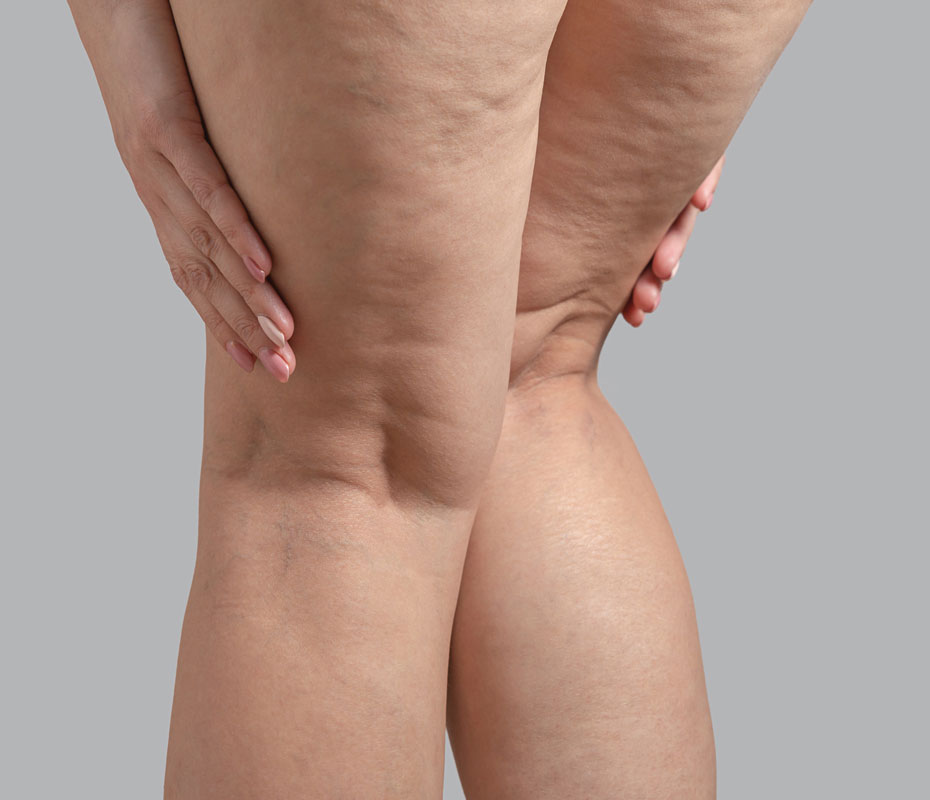
Quick Answer: Can you get rid of cellulite completely? Not always, but the right non-surgical approach can help soften the look of dimpling and leave skin looking smoother. Cellulite forms when fibrous bands tether skin over underlying fat, which is why lifestyle changes alone rarely eliminate it entirely. At Montrose London in Belgravia, non-surgical options such as EMTone, Thermage, Sofwave, Morpheus8, Mesotherapy and BTL Lymphastim offer different ways to address visible dimpling, skin texture and firmness, under the guidance of an experienced aesthetician.
Why You Can’t Always Get Rid of Cellulite Completely
Cellulite is a genuinely common skin condition, not a sign that something has gone wrong with your body. It occurs when fibrous bands tether the skin while the fat beneath can bulge between them, creating the dimpled, lumpy appearance most people recognise. Because the cause sits in the structure of the skin and connective tissue itself, rather than simply excess weight, it’s one of the reasons diet and exercise alone often can’t get rid of cellulite completely, even in people who are otherwise lean.
What Causes Cellulite?
- Genetics – a family history of cellulite increases the likelihood of developing it
- Hormonal changes – hormonal influences may contribute, though the role of individual hormones is not fully established
- Ageing – skin loses elasticity and becomes thinner over time, making cellulite more visible
- Lifestyle factors – poor diet and lack of exercise can contribute to its formation
- Body fat – an increase in body fat can make cellulite more visible, though it can also occur in lean individuals
- Skin structure – differences in connective tissue structure influence how cellulite appears
Cellulite typically appears as dimpled or lumpy skin – often described as a cottage cheese or orange peel texture – most commonly on the thighs, buttocks, hips and abdomen. Severity ranges from mild rippling to more pronounced depressions, and understanding which combination of causes applies to you is central to choosing an effective treatment.
Even slim, active people can have cellulite, and there’s a simple structural reason why the thighs and buttocks are where it shows up most: connective bands pull the skin down in some spots while fat pushes up between them, and genetics and skin structure decide how visible that pattern becomes. Diet and exercise don’t determine whether you get it. Understanding the cause is about finding a useful next step, not something to blame yourself for.
How the cellulite is shaped matters as much as where it is. A handful of defined dimples calls for a different conversation than widespread orange-peel texture or skin that’s lost some firmness. Photographs and an examination give you and your aesthetician a shared, precise way to describe what you’d like to improve before comparing treatment options.
Non-Surgical Treatments That Can Help You Get Rid of Cellulite
While no single treatment guarantees you’ll get rid of cellulite completely, several non-surgical options at Montrose can help skin look smoother and more even, depending on your skin and the option chosen.
EMTone
EMTone is a non-invasive treatment that combines radiofrequency (RF) and targeted pressure to help improve the appearance of cellulite while supporting smoother-looking, firmer-feeling skin, treating the thighs, buttocks, abdomen and arms. The RF energy heats the skin’s deeper layers to stimulate collagen production, while the targeted pressure energy adds mechanical stimulation alongside RF, giving the treatment two ways to work on the look and feel of the treated skin. Sessions take 20 to 30 minutes, with no downtime, and a course of 6 sessions is recommended, spaced one week apart. Prices start from £250 per session.
For someone asking how to reduce cellulite on the thighs or buttocks without taking time away from their routine, EMTone is a natural starting point to discuss. Its planned cellulite treatment course gives you a clear schedule to weigh against work, travel and budget, and the treated area can be reviewed as the sessions progress. Ask your aesthetician what level of smoothing would be realistic for your pattern of dimpling and whether follow-up cellulite treatment may be worthwhile.
Thermage
Thermage uses RF energy to heat the skin’s deeper layers, stimulating collagen production and tightening the treated area. It may complement EMTone in a cellulite plan, particularly where skin laxity is part of the picture. Sessions run up to 90 minutes including preparation time, with 1-3 days of recovery, and prices start from £1,800 for a single session with annual maintenance.
Thermage makes the most sense in a cellulite conversation when laxity contributes to the overall look of the area. Firmer-looking skin may change how surface irregularity catches the light, even though a distinct tethered cellulite dimple may remain. If you are considering Thermage alongside EMTone, ask what each session is intended to change and why both would be useful for you.
Sofwave
Sofwave is a non-surgical ultrasound treatment that delivers energy to the mid-dermis – the layer of skin responsible for collagen production – to lift, tighten and firm the skin, while integrated cooling protects the surface. It is most often used on the face and neck, but is also FDA-cleared for tightening skin on areas of the body and can be used on selected body areas at Montrose. Sessions take 45 to 75 minutes depending on the area, with no downtime, and one treatment is typical, with optional maintenance after 12 to 18 months. Prices start from £2,600 for one area.
Like Thermage, Sofwave belongs in a cellulite conversation when loose or crepey skin is part of what you see, rather than as a treatment for the dimples themselves. Results build gradually as new collagen forms, with visible improvement typically from 6 to 12 weeks after treatment. Ask your practitioner whether the area you want to treat is suitable for Sofwave, and how it would sit alongside a cellulite-focused course such as EMTone.
Morpheus8
Morpheus8 combines microneedling with RF energy to stimulate collagen deeper within the skin, targeting both face and body. Sessions run up to 90 minutes including numbing time, with 1-3 days of recovery, and prices start from £675 per session for body treatments, typically over three initial sessions with annual maintenance. Morpheus8 can complement a cellulite plan when broader skin texture and laxity are concerns.
Mesotherapy
Mesotherapy delivers a personalised blend of active ingredients directly into the skin through a series of tiny micro-injections. At Montrose, treatment uses mesohyal® by mesoestetic® – a CE-marked range of medical-grade solutions with a hyaluronic acid base – delivered with the U225 meso-injector, which lets your practitioner set the depth of each micro-injection precisely. For cellulite, a solution containing melilot is selected to improve the look of dimpling, while the non-cross-linked hyaluronic acid supports skin quality and hydration. Sessions start from 30 minutes, with minimal recovery of 24-48 hours, and a course of 3 to 6 sessions is typical. Prices start from £200 per session.
Mesotherapy is worth discussing when cellulite sits alongside skin that looks dull, dehydrated or less firm than it used to. Results build gradually over the course rather than after a single visit, and you may notice mild redness, small bumps or occasional bruising, which usually settle within 24-48 hours. Ask your aesthetician which mesohyal® solution they would choose for your skin and how it fits alongside any other treatment in your plan.
BTL Lymphastim
BTL Lymphastim is a gentle, non-invasive pressotherapy treatment that stimulates the lymphatic system – the network that drains excess fluid from the body’s tissues. You relax in air-compression trousers while 12 overlapping chambers inflate in sequence, creating a slow, wave-like pressure that mimics manual lymphatic drainage. It can help reduce fluid retention, ease heavy-feeling legs and improve the appearance of cellulite across the legs, buttocks, abdomen and lower back. Sessions take 30 minutes, with no downtime, and a course of 4 to 6 sessions around one week apart is typical. Prices start from £50 per session.
Lymphastim makes sense in a cellulite conversation when puffiness or fluid retention makes dimpling look more pronounced, or as support alongside other body treatments such as EMTone. It works on fluid in the tissues rather than the fibrous bands beneath a dimple, so it is best thought of as one part of a plan. It isn’t suitable for everyone – let your practitioner know about any heart, circulation or blood-clotting conditions before booking.
SkinPen Microneedling
SkinPen Microneedling uses fine, sterile needles to create controlled micro-injuries in the skin, stimulating collagen and elastin production. It’s suitable for both face and body, and may be considered when improving overall skin texture is part of your goal. Prices start from £395, with sessions up to 90 minutes including numbing time.
If the surface of the skin is your main concern, SkinPen can be discussed as a texture-focused addition to a cellulite plan. It is helpful to be precise here: improving the quality of skin around an area and changing the band beneath an individual cellulite dimple are different aims. At your assessment, you can ask what visible change SkinPen is expected to make in your particular case
Sciton ProFractional Laser
Sciton ProFractional Laser is a fractionated laser that creates thousands of microscopic channels in the skin to stimulate collagen production and improve texture. It treats the face, neck, decolletage & body, giving people with broader skin-texture concerns another option to discuss. Sessions take up to 90 minutes, with 4 to 7 days of recovery, and prices start from £495.
Lifestyle Support
Diet, exercise and hydration won’t get rid of cellulite on their own, but they’re worth doing anyway. Eating well and moving regularly support your overall health, and can change how noticeable cellulite looks if muscle tone or body composition shifts as a result. Staying hydrated helps too. Caffeine or retinol creams can give skin a temporarily smoother look with consistent use, though they’re not something to rely on to make dimples disappear.
None of this needs to be a test of discipline – cellulite is common across body shapes, and home care alone is a perfectly reasonable choice if a procedure isn’t what you’re after. Strength training, regular movement and a good skincare routine can genuinely make dimpling less noticeable for some people, and a cream can offer a short-lived cosmetic lift in the meantime. Whether you stick with lifestyle steps alone or add a professional clinic treatment on top, comes down to what you’re trying to change.
Which Approach Is Right for You?
What is the best way to get rid of cellulite for you? Start with the area and the type of change you notice. Montrose can discuss a dedicated cellulite course, a firmness or texture treatment, or a staged combination where the concerns genuinely differ. The outline below gives you a starting point; your skin, schedule and comfort with downtime will ultimately shape the final decision.
- Mild cellulite with some skin laxity – EMTone, Thermage or Sofwave, used alone or combined
- Soft cellulite, uneven texture and fluid-associated puffiness – EmTone and Lymphastim
- Cellulite alongside broader skin texture or laxity concerns – EMTone, Morpheus8, Lymphastim or SkinPen Microneedling may be added to a treatment plan
- Cellulite with reduced muscle tone or poor definition – EMTone or Lymphastim
- Cellulite with fluid retention or heavy-feeling legs – BTL Lymphastim, used alone or alongside other body treatments
- Cellulite alongside dull or dehydrated skin – a course of mesotherapy may be considered
- Small, localised pockets and contour concerns – Sofwave, Mesotherapy and Lymphastim where appropriate
- More pronounced texture change – Sciton ProFractional Laser may be considered as part of a plan
- Early or preventive stage – lifestyle changes and topical products may be enough to manage appearance
- More established cellulite – a combination of treatments, assessed individually, tends to work best
The only reliable way to know which combination suits you is to have a proper assessment, since cellulite’s causes vary significantly from person to person.
What Happens During Your Consultation
- Consultation – A 30-minute consultation with an aesthetician to assess your skin and discuss your concerns.
- Triage – Montrose’s triage system ensures you’re matched with the most suitable practitioner for your specific presentation.
- Treatment plan – You’ll receive a tailored recommendation based on the causes and severity of your cellulite.
- Aftercare – Comprehensive post-treatment aftercare from Montrose’s doctors and aestheticians, with a dedicated Patient Co-ordinator as your point of contact throughout.
You may not be able to get rid of cellulite completely, but a thoughtfully chosen plan may make your skin look smoother and help you feel more confident in it. Montrose’s aesthetician-led approach means your treatment plan is built around your specific causes, not a one-size-fits-all protocol. Book a consultation to find out what would help you most.
FAQs
Can you get rid of cellulite?
Not always completely, since cellulite is caused by structural factors beneath the skin rather than excess fat alone. However, non-surgical treatments such as EMTone, Thermage and Morpheus8 may soften the look of dimpling and improve skin texture for some people.
Does exercise get rid of cellulite?
Exercise can improve muscle tone and reduce body fat, which may make cellulite less noticeable, but it doesn’t address the underlying connective tissue structure that causes the dimpled appearance. It is worthwhile whether or not you decide to have a clinical treatment.
What is the best non-surgical treatment for cellulite?
This depends on your specific cellulite and skin type. EMTone and Thermage are both used at Montrose to address the appearance of cellulite and skin firmness in different ways, and are sometimes combined with Morpheus8 for broader skin texture concerns. Mesotherapy and BTL Lymphastim may also be added to a plan, to support skin quality and to address fluid retention respectively. Where loose or crepey skin is part of the picture, Sofwave may also be considered.
Are cellulite creams effective?
Topical creams containing ingredients like caffeine or retinol can improve skin texture and may make cellulite slightly less visible, but they work at the surface level and are unlikely to get rid of cellulite on their own.
Is cellulite only caused by being overweight?
No. While increased body fat can make cellulite more visible, it also occurs in lean individuals, since
genetics, hormones, ageing and skin structure all play a role.
How many sessions of EMTone, Thermage or Morpheus8 will I need?
This depends on the treatment and your individual presentation. EMTone typically involves a course of sessions, Thermage is often delivered as a single session with annual maintenance, and Morpheus8 usually involves three initial sessions. Your aesthetician will set out a specific plan at your consultation.
Is cellulite treatment painful?
Non-surgical treatments such as EMTone and Thermage are generally well tolerated. Morpheus8 uses numbing cream beforehand, with mild warmth or tingling during treatment. Mesotherapy may cause light pricking, while BTL Lymphastim feels like a firm, rhythmic massage. Your practitioner will talk you through what to expect before treatment begins.
Is cellulite removal permanent?
A complete, permanent result cannot be guaranteed. Some approaches to individual cellulite dimples may last longer than temporary surface improvements, while skin and body composition continue to change. Ask what a realistic result would look like for you and whether a maintenance plan is likely.
Can cellulite be reduced on the thighs and buttocks?
Yes, the appearance of cellulite in these common areas may be improved. What works for a few deep dimples may be different from what helps broad rippling or loose-looking skin. An assessment lets your aesthetician discuss the right area, treatment aim and expected course with you.
Will weight loss or liposuction remove cellulite?
Weight changes may alter how cellulite looks, but even lean people have it. Liposuction removes fat rather than the fibrous bands that create cellulite dimples, so it is not a dependable cellulite solution and may make dimpling look more obvious.
How long does it take to see a change after cellulite treatment?
It depends on the treatment and what it is intended to improve. A course such as EMTone is assessed over several visits, while collagen-focused skin treatments may develop more gradually. Ask when photographs should be compared and when you would discuss any further sessions.
Can cellulite return after treatment?
Cellulite can remain or become noticeable again as skin and body composition change. That does not mean an initial improvement was meaningless; it does mean you should discuss likely duration and the option of maintenance before committing to a cellulite course.
Montrose London is a CQC-registered, Consultant-led clinic at 19 West Eaton Place, Belgravia, London SW1X 8LT, offering non-surgical treatments to help reduce the appearance of cellulite, including EMTone (from £250), Thermage (from £1,800), Sofwave (from $2,600 for one area), Morpheus8 (from £675 per session for body treatments), Mesotherapy (from £200) and BTL Lymphastim (from £50). Every treatment plan begins with a consultation with an experienced aesthetician. No GP referral required. Rated 4.93/5 on Doctify. Book at montroselondon.com or call 020 7112 8298.