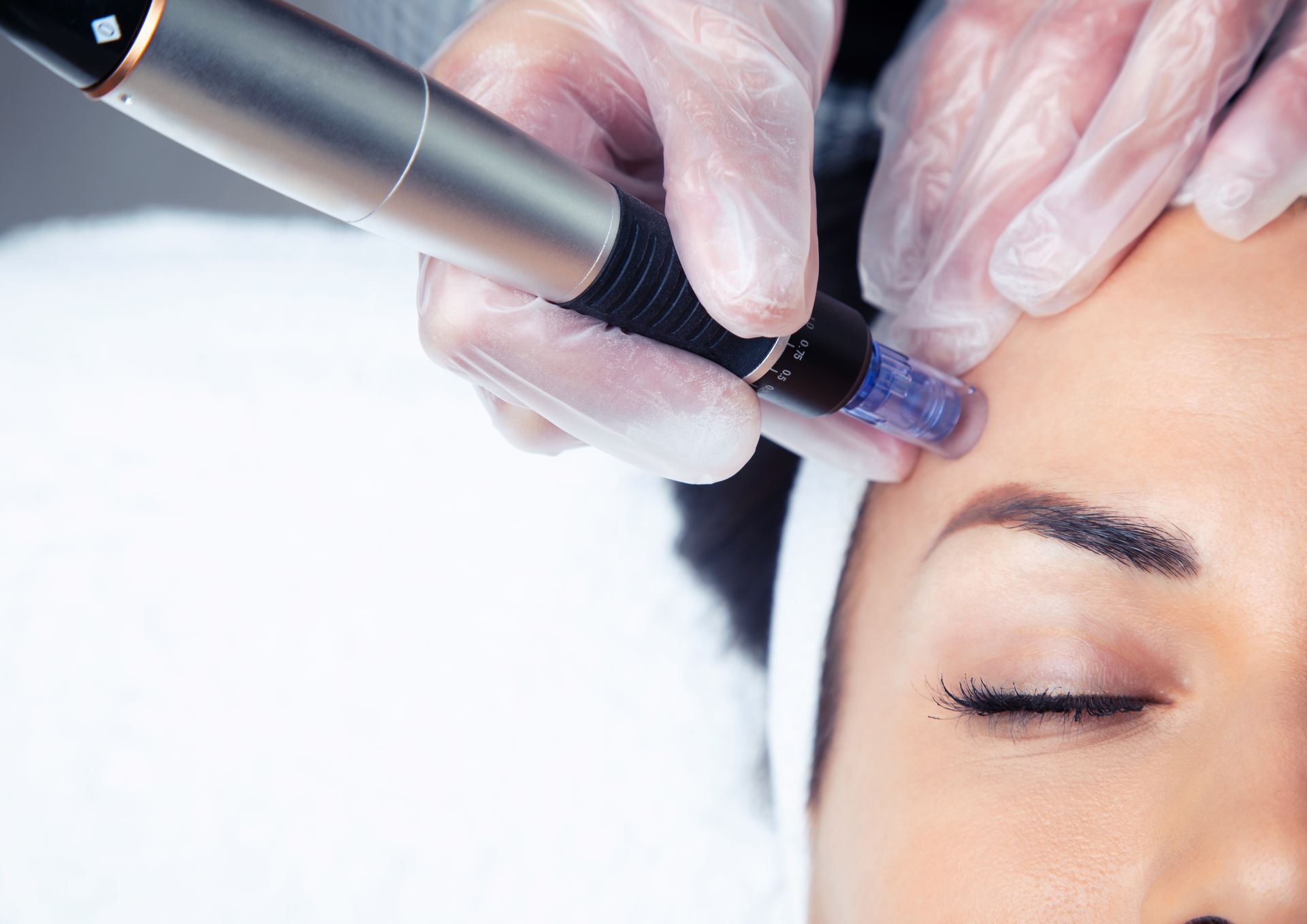
Quick Answer: Microneedling is a minimally invasive skin treatment that uses fine, sterile needles to create thousands of controlled micro-injuries in the skin, prompting the body to produce new collagen and elastin as it heals. At Montrose London in Belgravia, microneedling is delivered with the medical-grade SkinPen device to improve acne scarring, fine lines, enlarged pores, uneven texture and overall rejuvenation and collogen production – from £395 per session, up to 90 minutes including numbing time, with treatment plans guided by an experienced practitioner and overseen within a Consultant-led clinic. No GP referral is required.
Why Does Microneedling Work When So Many Skincare Products Don’t?
If you have spent money on serums that promised to rebuild collagen and resurface acne scars, you already know the frustration. Most topical products sit on the surface. They cannot reach the deeper layer of the skin – the dermis – where collagen is actually made. That is the gap microneedling is designed to close.
The principle is called collagen induction therapy. By creating tiny, controlled wounds in the skin, microneedling triggers the body’s natural repair response. New collagen and elastin are laid down as the micro-channels heal, and the skin remodels itself over the following weeks and months. It is your own biology doing the work – prompted, not replaced.
The results are real, but they build gradually rather than overnight. Research in the dermatological literature has reported that microneedling improved the appearance of acne scars in around 70% of participants in one study, with measurable improvements in skin texture after a course of sessions. Recognised bodies such as the British Association of Dermatologists list microneedling among the techniques used to improve acne scarring. As with any such treatment, results depend on the concern being treated, the number of sessions, and the skill of the practitioner – which is why it rewards realistic expectations and a proper plan.
What Actually Happens to Your Skin During Microneedling?
Microneedling is performed using a hand-held device fitted with very fine needles. At Montrose, that device is the SkinPen – a medical-grade, electronically powered pen rather than a cosmetic roller. The depth of the needles can be adjusted across different areas of the face or body, so the treatment is tailored to your skin and your concern rather than applied uniformly.
As the device passes over the skin, it creates thousands of microscopic channels. These are small enough to heal quickly but deep enough to switch on the repair cascade. Three things follow:
- Collagen and elastin production – the foundation of firmer, smoother skin, rebuilt from within.
- Improved product absorption – the micro-channels allow active ingredients to penetrate far more effectively than they would on intact skin.
- Tissue remodelling – over subsequent weeks, scar tissue softens and surface irregularities are gradually refined.
The improvement is gradual and cumulative. You are not buying a single dramatic result; you are starting a process.
What Can Microneedling Treat?
Microneedling is versatile, which is part of its appeal, but it is not a cure-all. It is most effective for concerns rooted in skin texture, scarring and collagen loss. Below are the areas where it tends to deliver the most reliable benefit.
Acne Scarring
This is one of the strongest indications for microneedling. Atrophic acne scars – the indented, pitted marks left behind by inflammatory acne – respond well because the treatment stimulates collagen to gradually fill and smooth the depressed tissue. For many patients it is a genuinely effective option where creams have failed.
Fine Lines and Early Ageing
By boosting collagen and elastin, microneedling can soften the appearance of fine lines and improve the overall firmness and quality of the skin. It is well suited to early signs of ageing and to maintaining skin health over time, rather than to deep, established wrinkles.
Texture, Pores and Tone
Enlarged pores, rough or uneven texture, and a generally dull, tired-looking complexion all tend to improve as the skin remodels. The result is smoother, more refined skin with a healthier surface quality.
Suitability Across Skin Tones
Because microneedling is a mechanical treatment that does not rely on heat or light, it carries a lower risk of post-inflammatory hyperpigmentation than some laser-based options. This makes it a suitable consideration for a wide range of skin types, including darker skin tones, though suitability is always confirmed individually before treatment.
Microneedling vs Laser and At-Home Rollers: What’s the Difference?
Three very different things are often lumped together under “needling.” Understanding the distinction protects both your skin and your money.
- Medical microneedling (SkinPen) is performed in a regulated clinic by a professional with a sterile, single-use needle cartridge, adjustable depth, and a trained practitioner. This is what delivers measurable, controlled results.
- At-home dermarollers are cosmetic devices with fixed, shallow needles. They cannot reach a meaningful depth, are difficult to keep sterile, and carry a real risk of irritation, infection and uneven results. They are not a substitute for clinical treatment.
- Laser resurfacing uses heat or light energy rather than physical micro-injury. For deep acne scarring, laser is often considered the more powerful option, while microneedling serves as an excellent and gentler complementary therapy with less downtime. The right choice depends on your skin, which is exactly why an in-person assessment matters.
No reputable source can tell you which is right for you from a web page. What a good clinic offers is the judgement to match the treatment to the skin, and the honesty to say when microneedling is not the answer.
Who Should Consider Microneedling and Who Shouldn’t?
Microneedling tends to be a strong fit if:
- You have acne scarring or textural irregularity that topical products have not improved.
- You want to support collagen and skin quality as part of a longer-term plan rather than chase an overnight change.
- You prefer a minimally invasive option with relatively short downtime of one to three days.
It is generally not suitable if you have an active skin infection, active inflammatory acne, certain skin conditions, or if you are pregnant. Those with a history of skin cancer or photosensitivity should seek tailored advice first. This is precisely the kind of assessment that should happen before any needle touches the skin – never assumed from a form alone.
What Happens During Your Microneedling Appointment at Montrose?
At Montrose London, microneedling is delivered as a properly planned process, not a drop-in. Here is what to expect from start to finish.
- Preparation: To ensure your skin is in the best condition for treatment, please avoid aggressive procedures, such as ablative laser resurfacing, for 4–8 weeks before your SkinPen treatment. Avoid chemical peels for 1–2 weeks, excessive sun exposure, sunbeds and fake tan for 2 weeks, and stop using retinol and vitamin C 24 hours before treatment (prescription retinoids should be stopped 5–7 days before). On arrival, your practitioner will remove any makeup if required, review your medical history, discuss your concerns and take clinical photographs before proceeding with treatment.
- A numbing cream is applied for around 30 minutes to keep the treatment comfortable. This is why the appointment is booked for up to 90 minutes in total.
- The treatment itself. The SkinPen device is passed over the targeted areas, creating the controlled micro-injuries. Most people feel only a mild tingling or warmth.
- Following treatment, a soothing biocellulose mask is applied to help cool, calm and deeply hydrate the skin, reducing post-treatment redness while supporting the skin’s natural healing process.
- You may have redness, mild swelling and a sunburn-like sensation for a short period, and the skin may flake as it recovers. You will be given a full aftercare protocol, including strict sun protection and a pause on retinoids and vitamin C.
- Your plan. Microneedling works best as a course. Montrose typically recommends from three initial sessions, spaced several weeks apart, with annual maintenance to preserve results.
Ready to find out whether microneedling is right for your skin? You can book a consultation directly, with no GP referral required.
Frequently Asked Questions
How many microneedling sessions will I need?
Most concerns are best addressed with a course rather than a single treatment. Montrose typically recommends three initial sessions, spaced several weeks apart, followed by annual maintenance. Your practitioner will confirm the right plan for your skin at your consultation.
Is microneedling painful?
A numbing cream is applied for around 30 minutes before treatment, so most people feel only a mild tingling or warmth during the procedure. Comfort is one of the reasons the appointment is scheduled for up to 90 minutes in total.
How much does microneedling cost at Montrose?
SkinPen microneedling starts from £395 per session, with the appointment lasting up to 90 minutes including numbing time. Because the treatment works best as a course, your practitioner will discuss an appropriate plan and any package options at your consultation.
How long is the downtime after microneedling?
Recovery is usually one to three days. You can expect some redness, mild swelling and a sunburn-like sensation, and the skin may flake briefly as it heals. Following your aftercare protocol – particularly broad-spectrum SPF 50 – helps the skin settle quickly.
Is microneedling good for acne scars?
Yes. Acne scarring is one of the strongest indications for microneedling, because stimulating collagen helps to gradually fill and smooth indented, atrophic scars. Results build over a course of sessions, and for deeper scarring your practitioner may discuss combining it with other treatments.
When will I see results from microneedling?
Microneedling produces gradual, cumulative improvement rather than an instant change. Many people notice an initial glow and smoother texture within a couple of weeks, with collagen-driven results continuing to develop over the following weeks and months.
Is microneedling safe for darker skin tones?
Because it relies on controlled micro-injury rather than heat or light, microneedling carries a lower risk of post-inflammatory hyperpigmentation than some laser treatments, making it a suitable consideration for a wide range of skin types. Suitability is always confirmed individually before treatment.
Can I have microneedling before an event or holiday?
It is best to leave time for the skin to settle and for results to develop, so we would not recommend treating immediately before an event. Sun exposure must also be avoided afterwards. Speak to your practitioner about timing so your plan fits comfortably around your calendar.
Montrose London is a CQC-registered, Consultant-led clinic at 19 West Eaton Place, Belgravia, London SW1X 8LT. SkinPen microneedling starts from £395 per session (up to 90 minutes including numbing time), delivered by an experienced practitioner within a Consultant-led clinic and tailored to your skin and concerns. No GP referral required. Accepted by Bupa, Bupa Global, Vitality, Healix, Cigna, and WPA. Rated 4.92/5 on Doctify. Book a consultation at montroselondon.com or call 0207 1128 298.