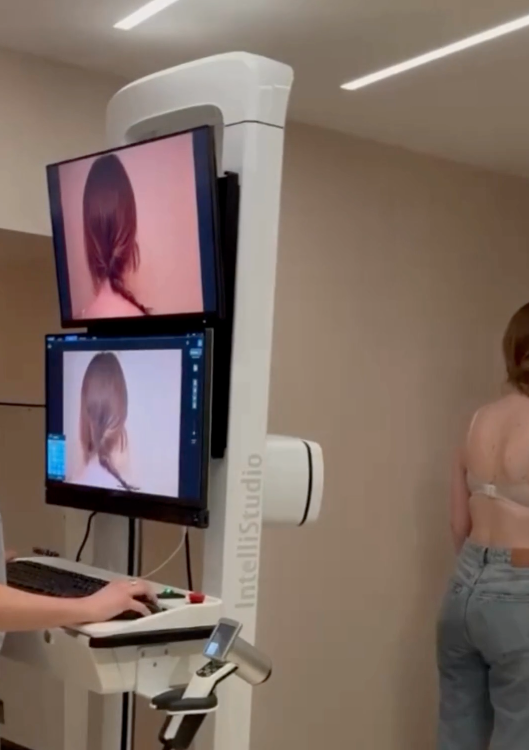
Quick Answer: For mole mapping in central London, Montrose London in Belgravia stands out on the three criteria that matter most: every assessment and image review is led by a Consultant Dermatologist (not a technician), imaging is performed on the Canfield Scientific IntelliStudio3® with DermaGraphix® – the world’s most advanced mole mapping system, which Montrose was the first UK clinic to use – and you receive a same-day written diagnostic report by email. Full body mole mapping is from £495 (45-60 minutes), with no GP referral required. Montrose is CQC-registered and rated 4.92/5 on Doctify.
What Separates the Best Mole Mapping Clinic From the Rest?
You’ve already decided you want mole mapping. The only question left is where to have it done, and in central London you are not short of options. The difficulty is that the listings all look broadly similar from the outside. They are not. The quality of a mole mapping service comes down to three things, and they are worth knowing before you book anywhere.
Skin cancer is one of the most treatable cancers when it is caught early, and melanoma is the most serious form. Cancer Research UK reports that melanoma is among the most common cancers in the UK, with rates having risen substantially over recent decades. That is precisely why the standard of your mole mapping matters: the entire point is to detect change early and accurately. A service that does that well is worth choosing with care.
The Three Things That Actually Matter
When you strip away the marketing, a genuinely excellent mole mapping service is defined by who reads your results, what they use to capture them, and how quickly you get answers.
1. Who Reviews Your Skin
This is the single biggest differentiator. At many clinics, the imaging is captured by a technician or nurse and the results are sent elsewhere to be read, often days later. At Montrose, every assessment and every image review is performed by a Consultant Dermatologist – not a technician, not a nurse practitioner, not a GP. With thirteen in-house Consultant Dermatologists, you are seen by a specialist of the highest calibre, and your results are interpreted by the same expert who examined you.
2. The Technology Used
Mole mapping combines total body photography with digital dermoscopy, which is high-magnification imaging that reveals structural features beneath the skin surface that are invisible to the naked eye. Montrose uses the Canfield Scientific IntelliStudio3® with DermaGraphix®, the world’s most advanced mole mapping system, and was the first clinic in the UK to use it. This creates a precise digital baseline of every visible mole, against which future appointments are compared to detect subtle change.
3. How Quickly You Get Results
A worrying mole should not mean an appointment letter and a week of anxiety. The best clinics give you answers quickly. At Montrose, your Consultant reviews the findings with you in the room, and a written diagnostic report is emailed to you on the same day as your appointment. Same-day written results are the standard here – not a premium add-on.
Why Location Matters: Mole Mapping in Central London
Belgravia sits at the heart of central London, a few minutes from Sloane Square, Victoria and Knightsbridge. For anyone searching for mole mapping in central London, Montrose offers a genuinely central, discreet and accessible private clinic – without the wait, the referral, or the impersonal feel of a larger hospital setting.
More importantly, mole mapping is most valuable as an ongoing relationship rather than a one-off. Because the value lies in comparing your skin against its own baseline year after year, choosing a central, established clinic you can return to easily, is part of choosing well.
Private Mole Mapping vs the NHS: An Honest Comparison
It is a fair question: why pay privately when the NHS exists? The answer is not that one is good and the other bad – they are designed for different things.
- The NHS is structured around investigating a specific, already-suspicious lesion, usually after a GP referral. It does an important job, but it is not set up to provide routine, preventative full-body baseline imaging for peace of mind, and waiting times for referral can be significant.
- Private mole mapping is preventative and proactive. It creates a complete digital record of your skin before there is a problem, so that change can be spotted early. There is no referral required and no waiting list – you can book directly.
- Where private medical insurance fits in. Montrose is on the approved panel for Bupa, Bupa Global, Vitality, Healix, Cigna and WPA. Individual mole checks may be covered where there is a clinical indication, subject to your policy – we recommend obtaining pre-authorisation from your insurer before your appointment, and we will provide all the documentation they need. Full body mole mapping, however, is generally not covered by insurance, as it is a preventative baseline service rather than the investigation of a specific problem, although limited exceptions do apply.
There is also the matter of fragmented versus integrated care. With the NHS pathway, assessment, imaging, results and any removal can involve different settings and different teams over weeks. At Montrose, the pathway is joined up end to end.
The Montrose End-to-End Pathway
One of the strongest reasons to choose an integrated clinic is that everything happens under one roof, with no loose ends:
- Imaging – your skin is recorded in detail on the Canfield Scientific IntelliStudio3® with DermaGraphix®.
- Assessment – a Consultant Dermatologist takes a full personal and family history and assesses your individual risk.
- Same-day results – findings are reviewed with you in the room and a written report is emailed the same day.
- Removal, if needed – any lesion requiring removal is performed within days by a Consultant Plastic Surgeon, with no additional referral.
- Histopathology – analysis is arranged through an accredited UK laboratory.
- Annual monitoring – your digital baseline supports longitudinal review year on year.
Who Should Consider Mole Mapping?
Mole mapping is particularly worth considering if any of the following apply to you:
- A personal or family history of melanoma or other skin cancer.
- A high mole count – more than 50 moles, or a number of atypical or changing moles.
- Fair or freckled skin with significant past sun exposure or a history of sunburn.
- A mole that has changed – grown, altered in shape or colour, started itching or bleeding, or that simply looks different from your others.
- Peace of mind – you would value a clear, professional baseline record of your skin.
What Happens During Your Mole Mapping Appointment?
A baseline appointment takes around 45 to 60 minutes and is unhurried, Consultant-led, and fully explained throughout. For the best image quality, you will be asked to attend without makeup, fake tan or nail polish, and to avoid heavy moisturiser on the day. On arrival you will be shown to a private changing area, then taken to the imaging suite, where a member of our team captures your whole-body images. From there, you will meet your Consultant Dermatologist, who reviews the whole-body map before examining individual lesions under 20 times magnification, selecting appropriate lesions for individual dermoscopy to be added to your map.
Your Consultant discusses your history and concerns, your skin is imaged in detail, and the results are reviewed with you before you leave – with the written report following by email the same day. Follow-up surveillance appointments are usually shorter, at around 30 minutes.
Ready to choose the most thorough mole assessment in central London? Book a consultation at Montrose – no referral required.
Frequently Asked Questions
What is the best mole mapping clinic in central London?
The best clinics combine Consultant-led assessment, the most advanced imaging, and same-day results. Montrose in Belgravia meets all three: every review is by a Consultant Dermatologist, imaging uses the Canfield Scientific IntelliStudio3® with DermaGraphix®, and you receive a written report the same day. Montrose is CQC-registered and rated 4.92/5 on Doctify.
How much does full body mole mapping cost at Montrose?
Full body mole mapping is from £495 and takes 45-60 minutes, with all imaging reviewed by a Consultant Dermatologist and same-day written results. Individual mole checks start from £190 for a single lesion (10 minutes) and £275 for two lesions (15 minutes). A dermatology initial consultation is £350 (30 minutes).
Do I need a GP referral for mole mapping?
No. You can book mole mapping or an individual mole check at Montrose directly, with no GP referral and no waiting list. This is one of the main advantages of a private, integrated clinic.
Does mole mapping hurt?
No. Mole mapping is entirely non-invasive – there are no needles, no radiation and no discomfort. The dermatoscope is briefly placed against the skin surface to capture images, with no contact beyond the areas being examined.
How often should mole mapping be repeated?
For most people, an annual review is appropriate. Patients with a higher-risk profile – for example atypical mole syndrome or a personal history of melanoma – may be reviewed every three to six months, at the discretion of the Consultant Dermatologist.
Is mole mapping covered by private medical insurance?
Mole mapping is generally not covered by insurance, although limited exceptions apply. Individual mole checks are recognised by most major UK insurers where there is a clinical indication. Montrose is on the approved panel for Bupa, Bupa Global, Vitality, Healix, Cigna and WPA, and will provide the documentation your insurer needs.
What happens if a suspicious mole is found?
Your Consultant Dermatologist discusses the options with you on the day. If removal is needed, it is scheduled within days and performed by a Consultant Plastic Surgeon, with histopathology arranged through an accredited UK laboratory – all without an additional referral.
How should I prepare for my appointment?
Please attend without makeup, fake tan or nail polish, and avoid heavy moisturiser on the day, as these can obscure lesions and affect image quality. You will be provided with a private changing area on arrival.
—
Montrose London is a CQC-registered, Consultant-led clinic at 19 West Eaton Place, Belgravia, London SW1X 8LT. Individual mole checks start from £190 and full body mole mapping from £495, with all appointments led by a Consultant Dermatologist using the Canfield Scientific IntelliStudio3® with DermaGraphix® – the world’s most advanced mole mapping system, first introduced to the UK by Montrose. Same-day written results are emailed to all patients on the day of their appointment. No GP referral required. Accepted by Bupa, Bupa Global, Vitality, Healix, Cigna, and WPA. Rated 4.92/5 on Doctify. Book at https://skin.montroselondon.com/mole-mapping or call 0207 1128
298