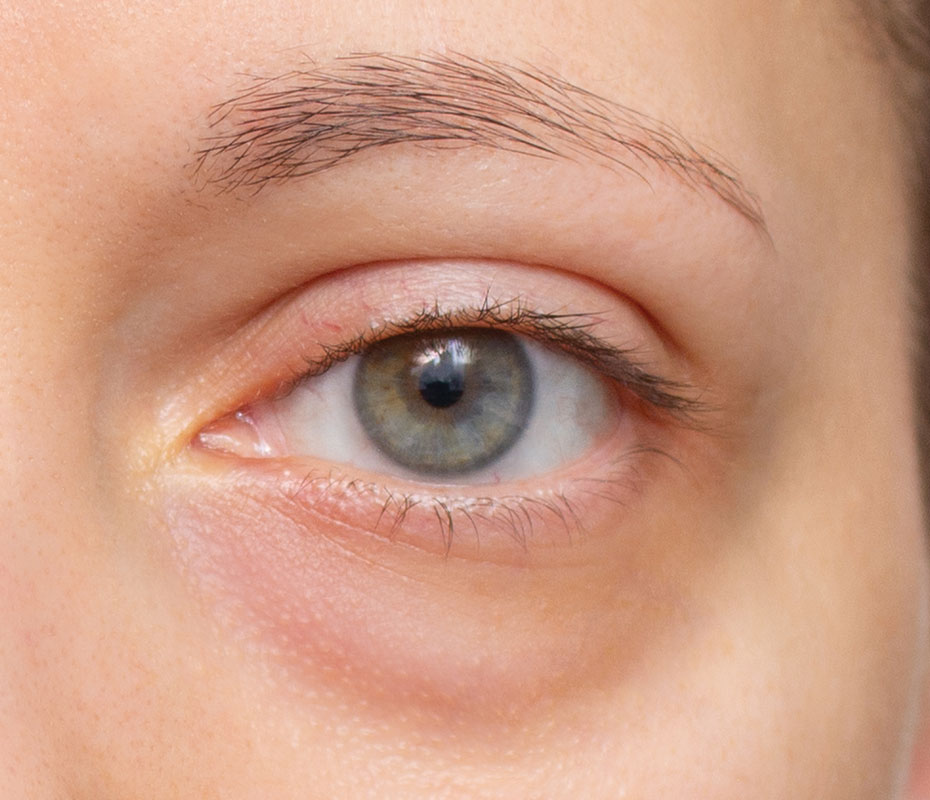
Quick Answer: Effective treatment for bags under the eyes depends on the cause. If the bags come from bulging fat pads, only surgery – lower eyelid blepharoplasty – removes or repositions the fat itself. If the concern is volume loss, hollowing or skin quality rather than true fat pads, non-surgical options such as tear trough filler, polynucleotides, laser treatments or radiofrequency can be very effective. At Montrose London in Belgravia, a Consultant Plastic Surgeon assesses which category your concern falls into before recommending a treatment plan, rather than applying the same fix to every patient.
Bags under eyes are visible puffiness or fullness beneath the lower eyelids. They can be temporary, for example from fluid retention, or more persistent when ageing and tissue changes allow fat to move forward. The right treatment therefore depends on whether the main issue is swelling, hollowing, skin quality or structural fat-pad prominence
Why “Bags Under the Eyes” Isn’t One Problem
Search “treatment for bags under eyes” and most results treat it as a single condition with a single fix. It isn’t. Two people can both describe “bags” and be dealing with genuinely different things: one has a true fat pad bulging forward as the tissue supporting it weakens with age, and the other has hollowing, thinning skin or fluid retention that only looks similar in the mirror.
This distinction matters because the treatments aren’t interchangeable. Fillers and regenerative injectables can do a great deal for volume loss and skin quality, but they cannot remove or reposition a fat pad that has genuinely prolapsed forward – only surgery does that. Getting this diagnosis right, before treatment rather than after, is what determines whether a treatment is “effective” for your specific concern.
What Causes Bags Under the Eyes
Ageing – the tissues and membrane supporting the under-eye fat weaken over time, allowing fat to bulge forward into the lower eyelid.
Genetics – a family history of under-eye bags or thin skin makes them more likely to appear, sometimes even in younger patients.
Fluid retention – salty food, hormonal changes, or lying flat overnight can cause temporary puffiness that settles during the day.
Lack of sleep – makes surrounding skin appear paler, which can make dark circles and puffiness more noticeable.
Lifestyle factors – smoking, alcohol and dehydration can all exacerbate the appearance of bags and dark circles.
Most patients are dealing with more than one of these factors at once, which is exactly why a proper assessment matters more than picking a treatment off a list.
Temporary vs persistent bags under eyes – morning puffiness that changes with sleep, salt intake, allergies or head position is more likely to include a fluid-retention component. Bags that remain consistently visible despite lifestyle changes may be more structural and can reflect fat-pad prominence, skin laxity or associated hollowing. For temporary puffiness, a cool compress, adequate sleep, sleeping with the head slightly raised, reducing excess salt and addressing allergy triggers can help reduce swelling. These at-home measures may improve puffiness, but they do not remove prolapsed lower-eyelid fat or correct significant structural hollowing.
Non-Surgical Treatments for Bags Under Eyes
Tear Trough Filler
Tear trough filler uses hyaluronic acid to restore lost volume beneath the eyes, smoothing the transition between the lower eyelid and cheek. At Montrose, this is delivered by specialist plastic surgeons using microcannula technique for a natural result. It’s most effective for hollowing and volume loss rather than for true fat-pad bulging, with results typically lasting 12-18 months. Prices start from £650.
Polynucleotides
Polynucleotide injections work differently to filler: rather than adding volume, they introduce nucleotides – the basic molecular building blocks that make up DNA and RNA – that stimulate the skin’s own regenerative processes, improving hydration, texture and fine lines around the eyes. A 2025 clinical review found promising but still-developing evidence for this category of treatment, with improvements reported in skin texture and elasticity across several studies. Polynucleotides can meaningfully improve skin quality and early signs of ageing around the eyes, but they do not remove true fat-pad bags. Prices start from £500, typically over 2-4 sessions.
Laser Treatments
Laser options such as Contour TRL, Sciton ProFractional and Sciton HALO can improve skin tone, texture and mild laxity around the eyes, and are often combined with Sciton BBL to address pigmentation at the same time. These work well for skin quality concerns – crepiness, dullness, fine lines – rather than structural fat-pad bulging.
Thermage
Thermage uses radiofrequency energy to heat the skin’s deeper layers, stimulating collagen production and tightening the treated area. This can be an effective option for mild under-eye bags where skin laxity, rather than fat prolapse, is the primary driver.
Surgical Treatment: Lower Eyelid Blepharoplasty
For genuine fat-pad bags – where the bulge is caused by fat pushing forward rather than volume loss or skin laxity – lower eyelid blepharoplasty is the treatment that directly addresses the cause. The procedure removes or repositions the prolapsed fat and can tighten the surrounding skin, offering a more permanent correction than any non-surgical option can achieve for this specific type of bag.
This is a surgical procedure with a genuine recovery period, and is considered after non-surgical options have been discussed and ruled out as insufficient for the concern. We cover this in more detail on our Under-Eye Bags condition page, including how it’s assessed at Montrose.
Lower eyelid blepharoplasty can provide long-lasting improvement when the main problem is structural fat prominence or excess lower-eyelid tissue, but no cosmetic procedure stops the normal ageing process. The surgeon will discuss anaesthesia, recovery, scarring and possible complications as part of informed consent.
Which Treatment Is Right for You?
Visible fat pushing forward, unaffected by sleep or hydration – likely a true fat-pad bag; lower blepharoplasty is usually the most effective option.
Hollowing or a shadowed groove beneath the eye – volume loss; tear trough filler is the better fit.
Crepiness, dullness or fine lines without real bulging – a skin-quality concern; polynucleotides, laser treatments or thermage are usually more appropriate.
A combination of the above – many patients benefit from combining several treatments together.
This article is a guide, not a diagnosis – the only reliable way to know which category applies to you is to book an in-person assessment.
What Happens During Your Consultation
- Assessment – A Consultant Plastic Surgeon examines the under-eye area to determine whether fat prolapse, volume loss, skin laxity, or a combination is driving your concern.
- Discussion – Your goals, medical history and any previous treatments are discussed alongside what’s realistically achievable.
- Treatment plan – You’ll receive a clear recommendation, surgical or non-surgical, with the reasoning behind it explained.
- Treatment and follow-up – Non-surgical treatments are typically delivered the same day; surgical blepharoplasty involves a separate planning and recovery pathway, with follow-up to monitor healing.
Because “bags under the eyes” can mean genuinely different things, the most effective treatment is the one matched to the actual cause – not the most popular treatment on a list.
Montrose’s Consultant Plastic Surgeons assess this properly before recommending a plan, whether that’s a non-surgical injectable, a laser course, or surgical blepharoplasty. Book a consultation at Montrose London to find out what’s most effective for you.
FAQs
What is the most effective treatment for bags under the eyes?
It depends on the cause. True fat-pad bags respond best to lower eyelid blepharoplasty, since only surgery removes or repositions the fat itself. Volume loss or skin-quality concerns often respond well to non-surgical options such as tear trough filler, polynucleotides or laser treatments.
Can fillers get rid of under-eye bags completely?
Fillers are effective for hollowing and volume loss, but they do not remove true fat-pad bags. If your bags are caused by fat pushing forward rather than lost volume, filler may improve the overall look without fully resolving the underlying cause.
Do polynucleotides work for under-eye bags?
Polynucleotides can improve skin quality, hydration and fine lines around the eyes, and work well for early signs of ageing in this area. They do not remove true fat-pad bags, which require a surgical approach.
How do I know if I need surgery or a non-surgical treatment?
This depends on whether your bags are caused by fat prolapse, volume loss, or skin laxity – and often a combination of all three. A Consultant Plastic Surgeon can assess this at consultation and recommend the most effective option for your specific presentation.
Is blepharoplasty painful?
Blepharoplasty is a surgical procedure carried out with appropriate anaesthesia, and some swelling and bruising during recovery is expected. Your surgeon will discuss what to expect at your consultation.
How long do non-surgical treatments for under-eye bags last?
This varies by treatment. Tear trough filler typically lasts 12 to 18 months. Polynucleotides are usually maintained with sessions every 6 to 12 months after an initial course. Your Consultant will set expectations specific to your treatment plan.
Can under-eye bags come back after surgery?
Blepharoplasty offers a longer-lasting correction than non-surgical options for true fat-pad bags, since it directly addresses the underlying fat. Skin continues to age after any procedure, so very gradual changes over many years are possible, but this is not the same as bags recurring quickly.
Are non-surgical treatments safe for under-eye bags?
When performed by qualified practitioners, treatments such as tear trough filler and polynucleotides carry a lower risk profile than surgery. Your Consultant will confirm suitability for your specific health history at consultation.
What is the fastest way to reduce bags under eyes?
If the puffiness is temporary and fluid-related, a cool compress, adequate sleep and reducing triggers such as excess salt or untreated allergies may make the area look less swollen. Persistent structural bags usually need an in-person assessment because home measures cannot reposition prominent fat pads.
Can eye creams get rid of bags under eyes?
Eye creams may improve hydration, texture or the appearance of fine lines, and cooling or caffeine-containing products may temporarily reduce puffiness for some people. They cannot remove or reposition prolapsed lower-eyelid fat, so they should not be presented as a permanent treatment for structural eye bags.
What is the difference between bags under eyes and dark circles?
Bags under eyes describe puffiness or fullness beneath the lower eyelids. Dark circles describe colour or shadowing and can be caused by pigmentation, visible vessels, thin skin or hollowing. The two can occur together, but they are not the same problem and may need different treatments.
Are bags under eyes permanent?
Not always. Fluid-related puffiness can fluctuate and may improve with lifestyle or allergy management, while structural bags caused by tissue laxity and fat prominence are usually more persistent. Treatment choice depends on which mechanism is present.
When should swelling under the eyes be medically assessed?
Bags under eyes are usually a cosmetic concern, but seek medical advice if swelling is sudden, one-sided, painful, associated with irritation or rash, affects vision, or occurs with other unexplained swelling. A clinician can assess whether the cause is cosmetic, allergic or medical.
Montrose London is a CQC-registered, Consultant-led clinic at 19 West Eaton Place, Belgravia, London SW1X 8LT, offering a full range of treatments for under-eye bags – from non-surgical options including tear trough filler (from £650) and polynucleotides (from £500) to surgical lower eyelid blepharoplasty – each assessed and delivered by a Consultant Plastic Surgeon. No GP referral required. Rated 4.93/5 on Doctify. Book at montroselondon.com or call 020 7112 8298.